Death Road Bike Tour Logo
English| EUR
Suggested for you
More currencies
Book Now
Open today · 00:00–23:59

Death Road Bike Tour

Death Road Bike Tour — Guided Descents on North Yungas Road

Cloud forest below the gravel, condor air above the drop.

4.8 /5 · 2,400 reviews
142K+ travelers chose this
Free Cancellation
Right now: Moderate — dry season peak Avoid mid-day fog and maximize visibility for the descent
Full day, roughly 10 hours
1 Languages
Small groups, 6–12 riders
Free Cancellation
Free cancellation Instant confirmation Mobile voucher Verified partner Book now, pay later
64 km
Total Length
Distance of the bike route
3,600 m
Elevation Drop
From La Cumbre to the jungle
12 ft
Average Width
Narrow sections without guardrails
209 km
Road Length
Total original Yungas Road distance
Choose your ticket

Death Road Bike tickets at a glance

Compare fares, pick the fit — all bookings are mobile-voucher and eligible for free cancellation where shown.

Death Road Mountain Biking Adventure from La Paz 24 hr
Guided Experience

Death Road Mountain Biking Adventure from La Paz

4.7 (75)
€95
  • Expert local guide
  • Small group
  • Skip-the-line access
  • Free cancellation
Book this ticket
Death Road Mountain Biking Adventure from La Paz 24 hr
Guided Experience

Death Road Mountain Biking Adventure from La Paz

5 (4)
€121
  • Expert local guide
  • Small group
  • Skip-the-line access
  • Free cancellation
Book this ticket
Compare options

Compare Death Road Bike ticket options

Experience FromDurationRatingLunchSkip-the-lineGuide Price
Guided Experience
Most popular
Death Road Mountain Bike Adventure from La Paz
La Paz24 hr★ 4.9 €125 Book →
Guided Experience
Death Road Mountain Biking Adventure from La Paz
La Paz24 hr★ 4.7 €95 Book →
Guided Experience
Death Road Mountain Biking Adventure from La Paz
La Paz24 hr★ 5.0 €121 Book →

Is a Death Road Bike Tour Worth It?

Worth it for confident riders, not casual cyclists

A death road bike tour buys you roughly 64 km of continuous descent from the Cumbre pass at 4,650 m down to subtropical Coroico at around 1,200 m, plus a 50 BOB conservation fee paid per person at the entrance checkpoint. What you actually get is a gravel single-track carved into a cliff, waterfalls crossing the roadbed, and a 3,000-metre climate shift from altiplano cold to humid Yungas jungle. The risk is real: exposed drop-offs without guardrails, loose surface, and forearm and brake-hand fatigue that catches out riders who underestimate three hours of braking. Operators vary sharply in bike maintenance, suspension quality, and guide-to-rider ratios, and the cheapest North Yungas Road tour is usually the one cutting those corners. It pays off for anyone with real mountain-biking control who wants the adrenaline honestly earned. It does not pay off for nervous descenders or anyone treating it as a photo errand.

What makes it worth it

  • Continuous 64 km descent, almost no pedalling required
  • Dramatic altiplano-to-jungle climate and scenery shift
  • Low 50 BOB conservation fee for the corridor
  • Genuine adrenaline payoff for experienced mountain bikers
  • Reputable operators provide full protective gear

Keep in mind

  • Unguarded cliff drops punish any loss of control
  • Severe brake-hand and forearm fatigue over hours
  • Cheap operators skimp on bike maintenance and guides
  • Physically taxing at altitude for unfit riders

Bottom line: Book the death road bike tour if you can genuinely control a bike on loose gravel — otherwise your money buys fear, not thrill.

Featured Experiences

Popular Death Road Bike tours & activities

Hand-picked experiences loved by thousands of travelers

Recommended Experience

Powered by GetYourGuide

Another traveler favorite

Powered by GetYourGuide
Private Death Road Mountain Bike Adventure 12 hours Free Cancellation

Private Death Road Mountain Bike Adventure

Descend 3,450 meters from Andean peaks to tropical jungle on Bolivia's legendary cliff-hugging route

5 (7)
FromFrom €128.79
See details
Death Road Mountain Biking Adventure Full day (approximately 13 hours) Free Cancellation

Death Road Mountain Biking Adventure

Tackle Bolivia's legendary downhill cycling route through cloud forests and dramatic mountain scenery

4.4 (7)
FromFrom €108.05
See details
Death Road Mountain Biking Adventure from La Paz 11 hours Free Cancellation

Death Road Mountain Biking Adventure from La Paz

Tackle the world's most infamous downhill route on two wheels through Bolivia's dramatic landscapes

FromFrom €103.73
See details
Death Road Mountain Biking Adventure 9 hours Free Cancellation

Death Road Mountain Biking Adventure

Tackle Bolivia's legendary mountain route from high Andes peaks down into tropical rainforest

FromFrom €138.3
See details
Death Road Mountain Biking Adventure with Lunch Full day Free Cancellation

Death Road Mountain Biking Adventure with Lunch

Descend one of the world's most notorious routes on a thrilling downhill bike journey from the Andes to the jungle

FromFrom €112.37
See details
Death Road Bike & Uyuni Salt Flats 3-Day Adventure 3 days Free Cancellation

Death Road Bike & Uyuni Salt Flats 3-Day Adventure

Cycle the world's most dangerous road, then witness the surreal beauty of Bolivia's salt desert

FromFrom €252.4
See details
Death Road Mountain Bike Adventure with Lunch 1 day Free Cancellation

Death Road Mountain Bike Adventure with Lunch

Tackle the world's most notorious downhill route on a full-suspension bike from 4,700m elevation

3.4 (7)
FromFrom €121.01
See details
What you'll see

What you'll see at Death Road Bike

La Cumbre Pass

La Cumbre Pass

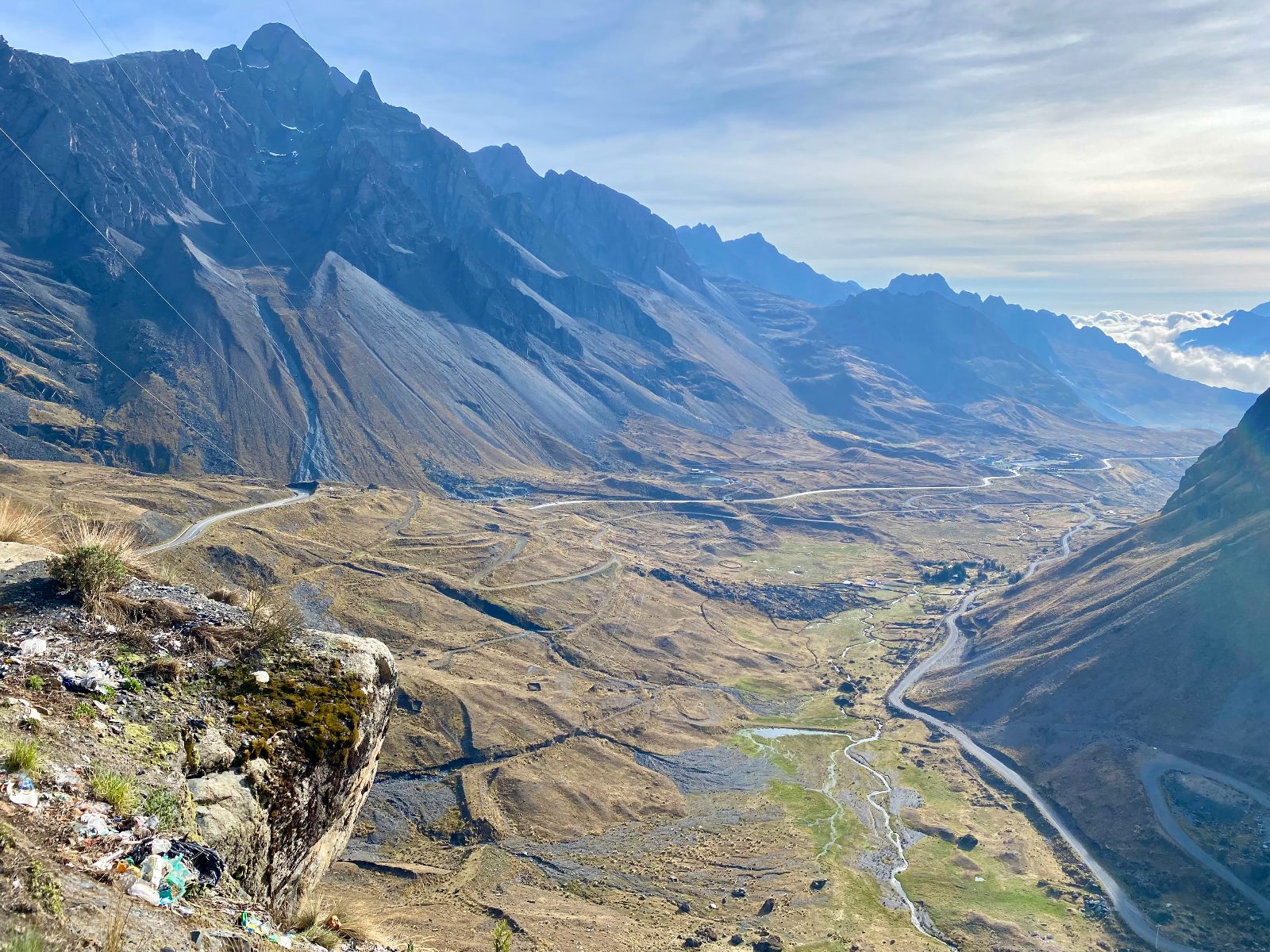
The starting point of the descent at 4,700 meters above sea level, offering panoramic views of the Cordillera Real.

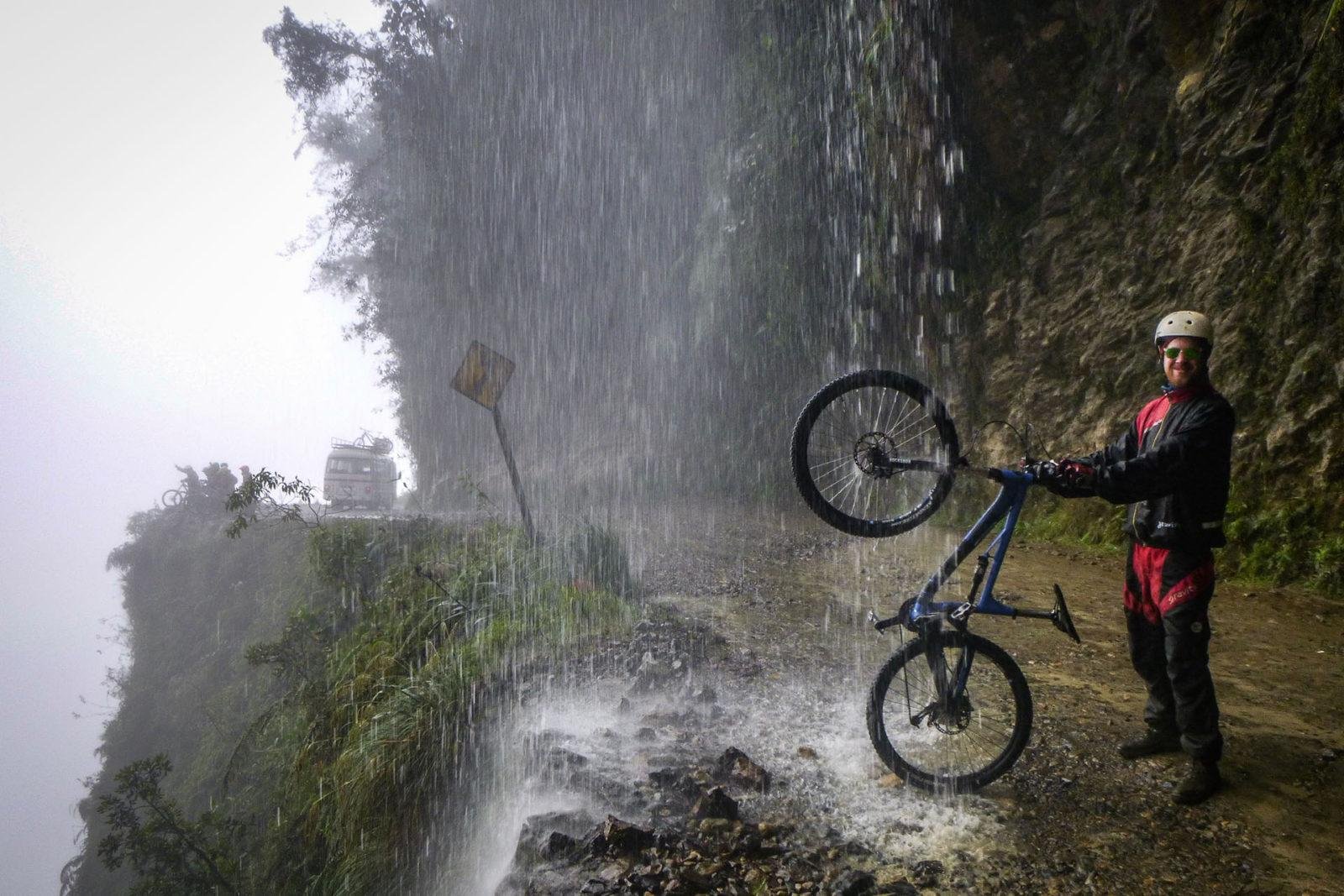
Waterfall Crossings

Waterfall Crossings

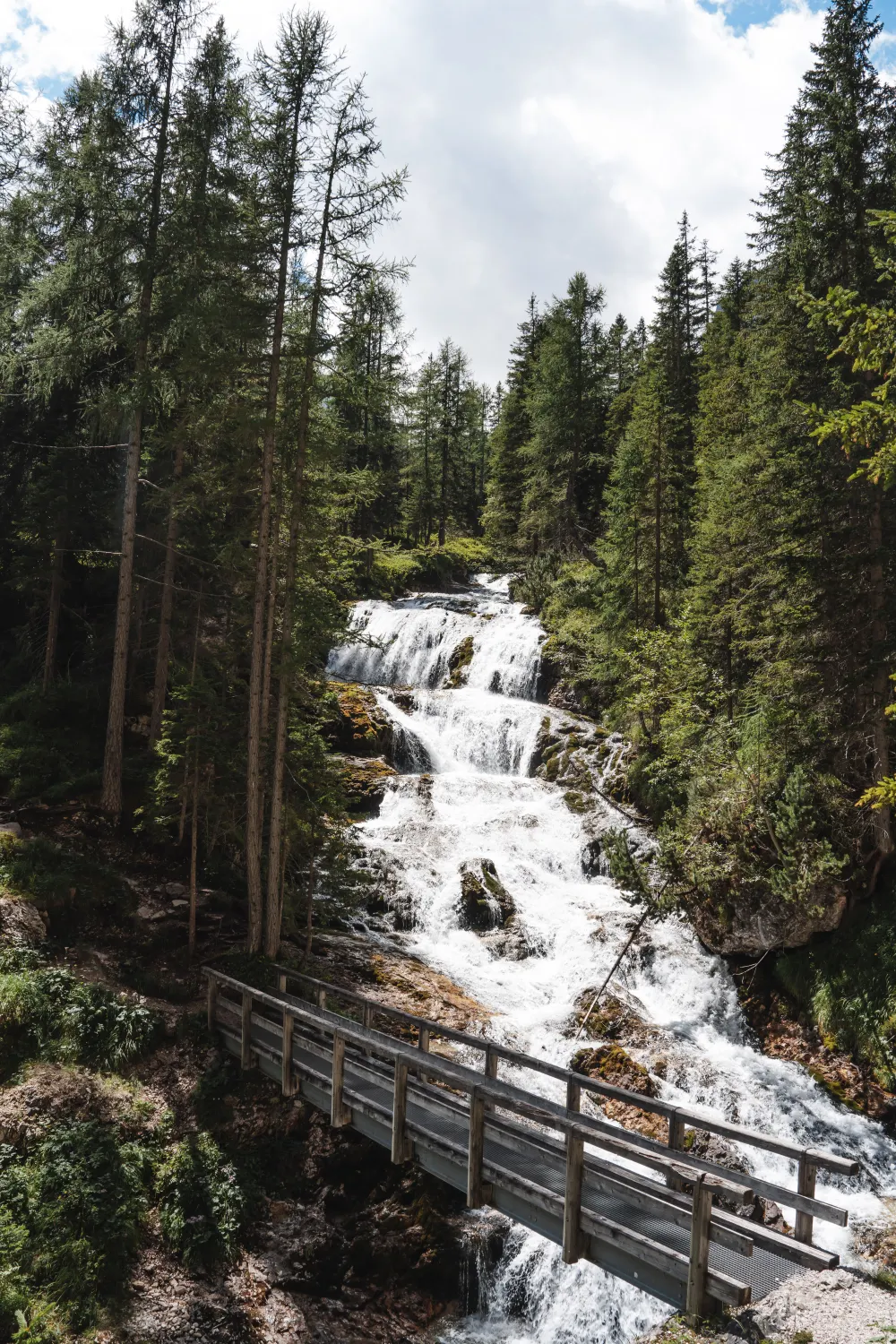
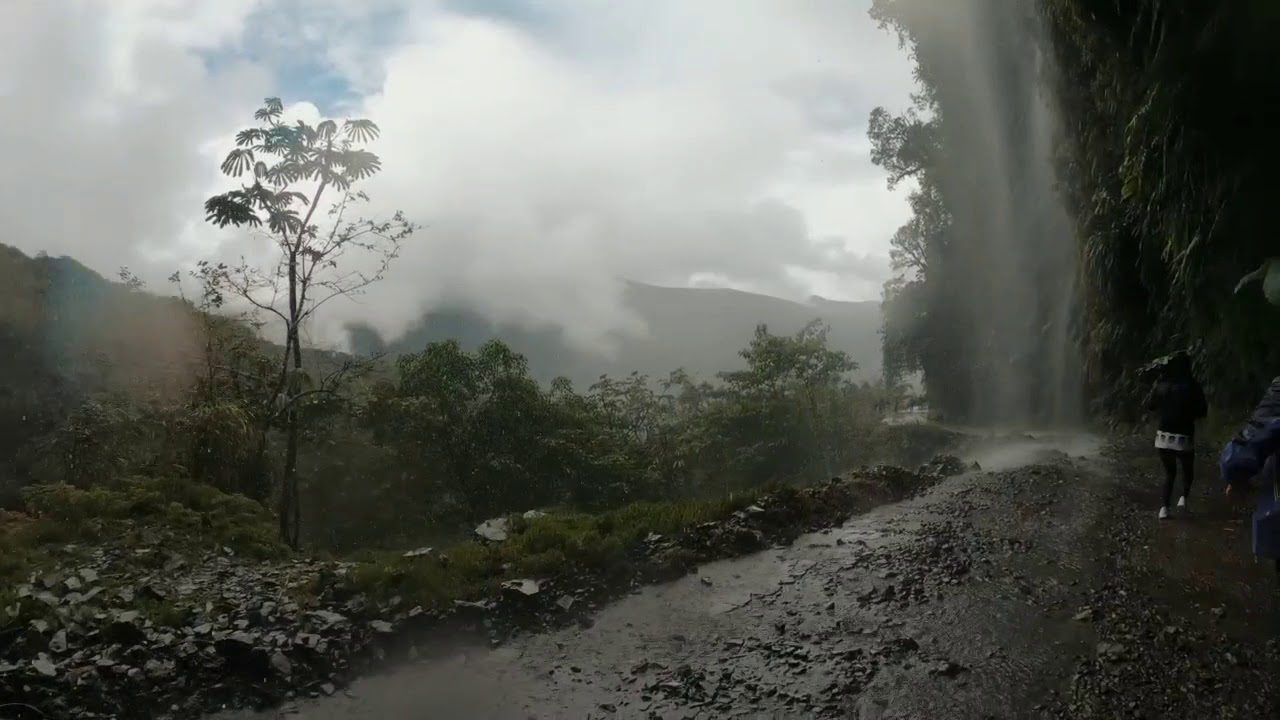
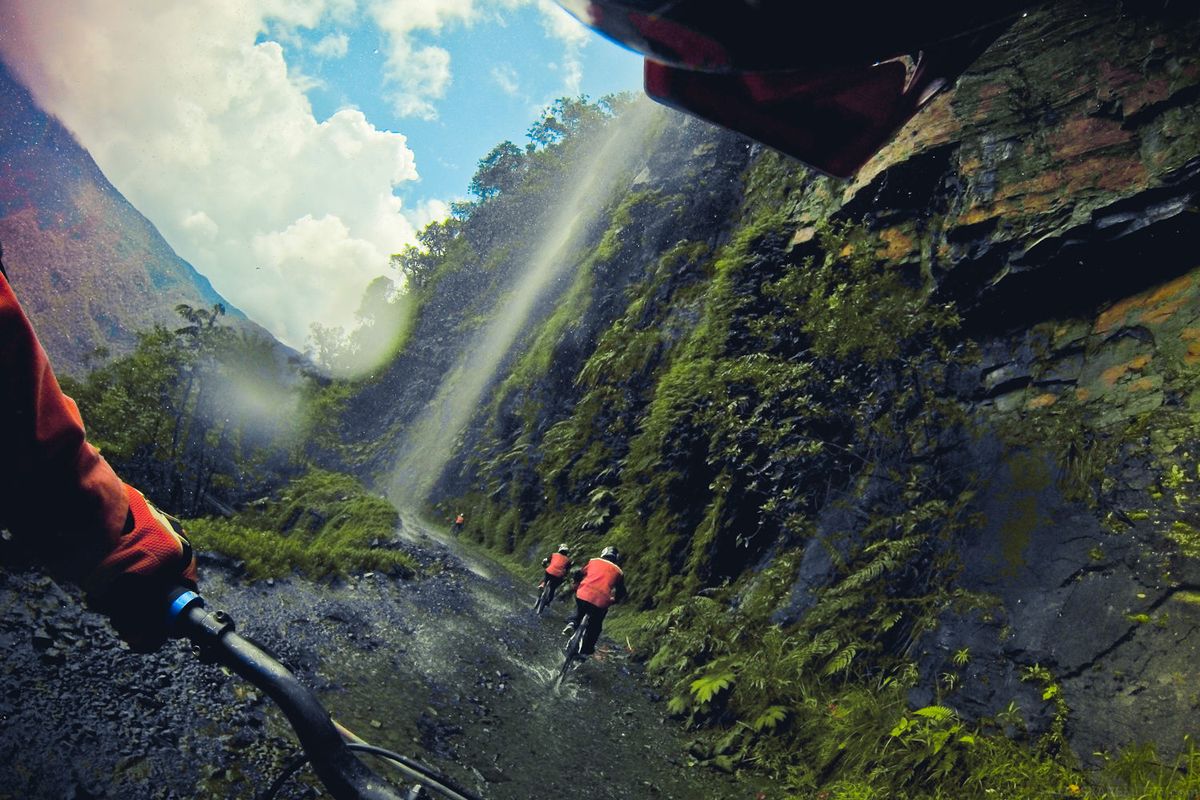
Natural springs that flow directly across the gravel track, requiring riders to navigate through shallow, flowing water.

The Cliff Edge

The Cliff Edge

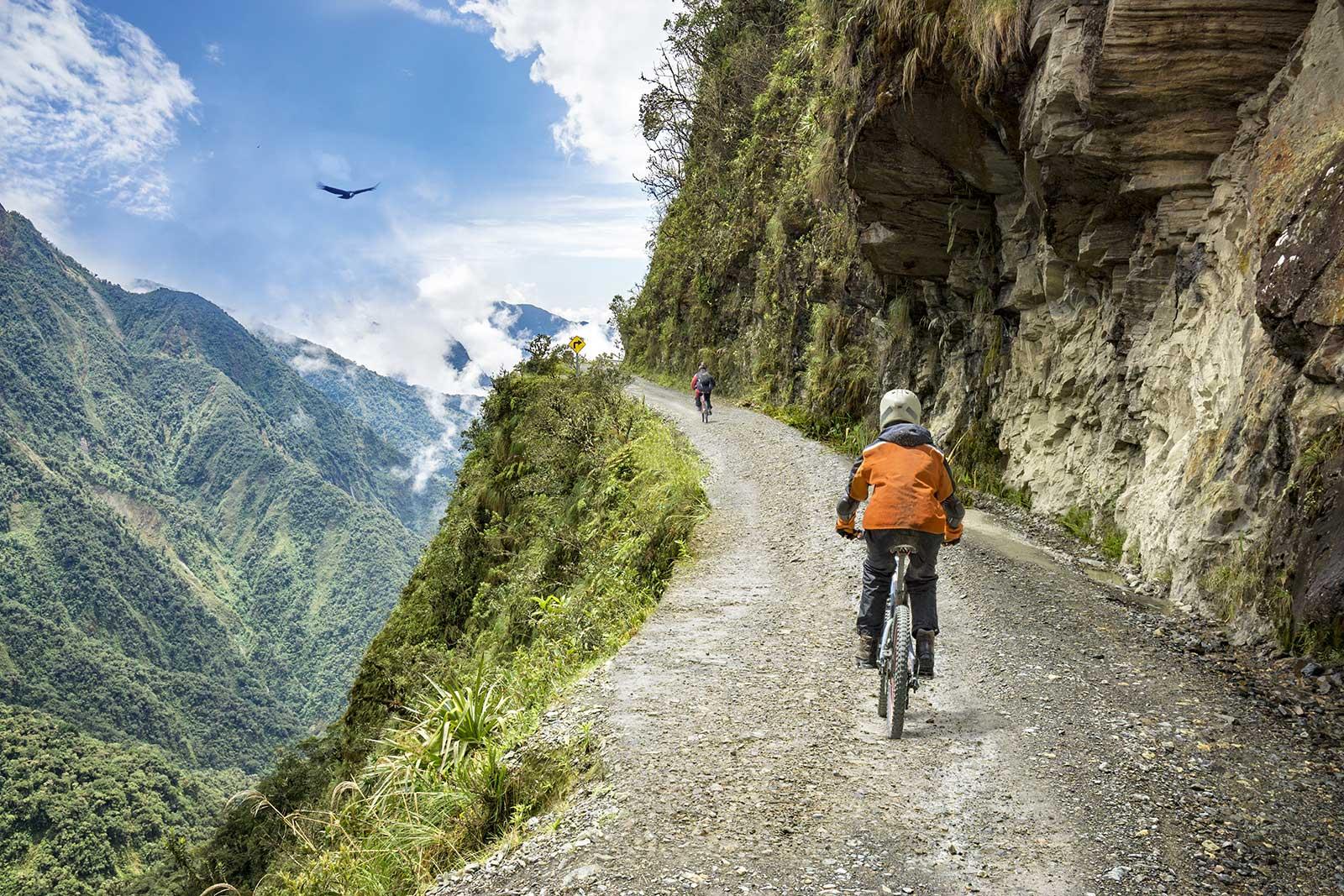
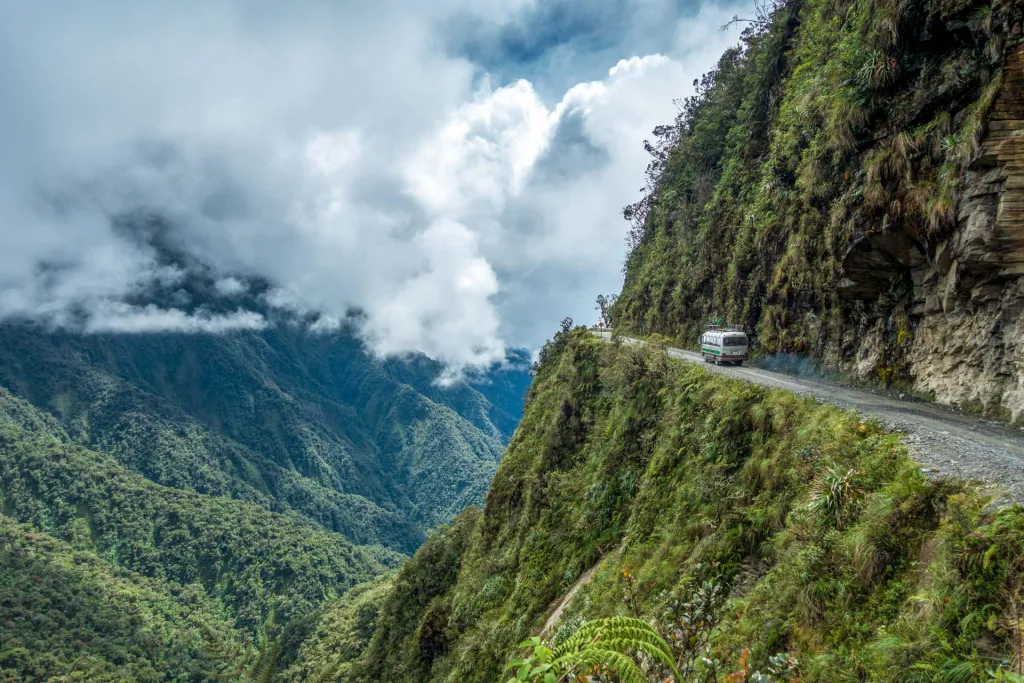
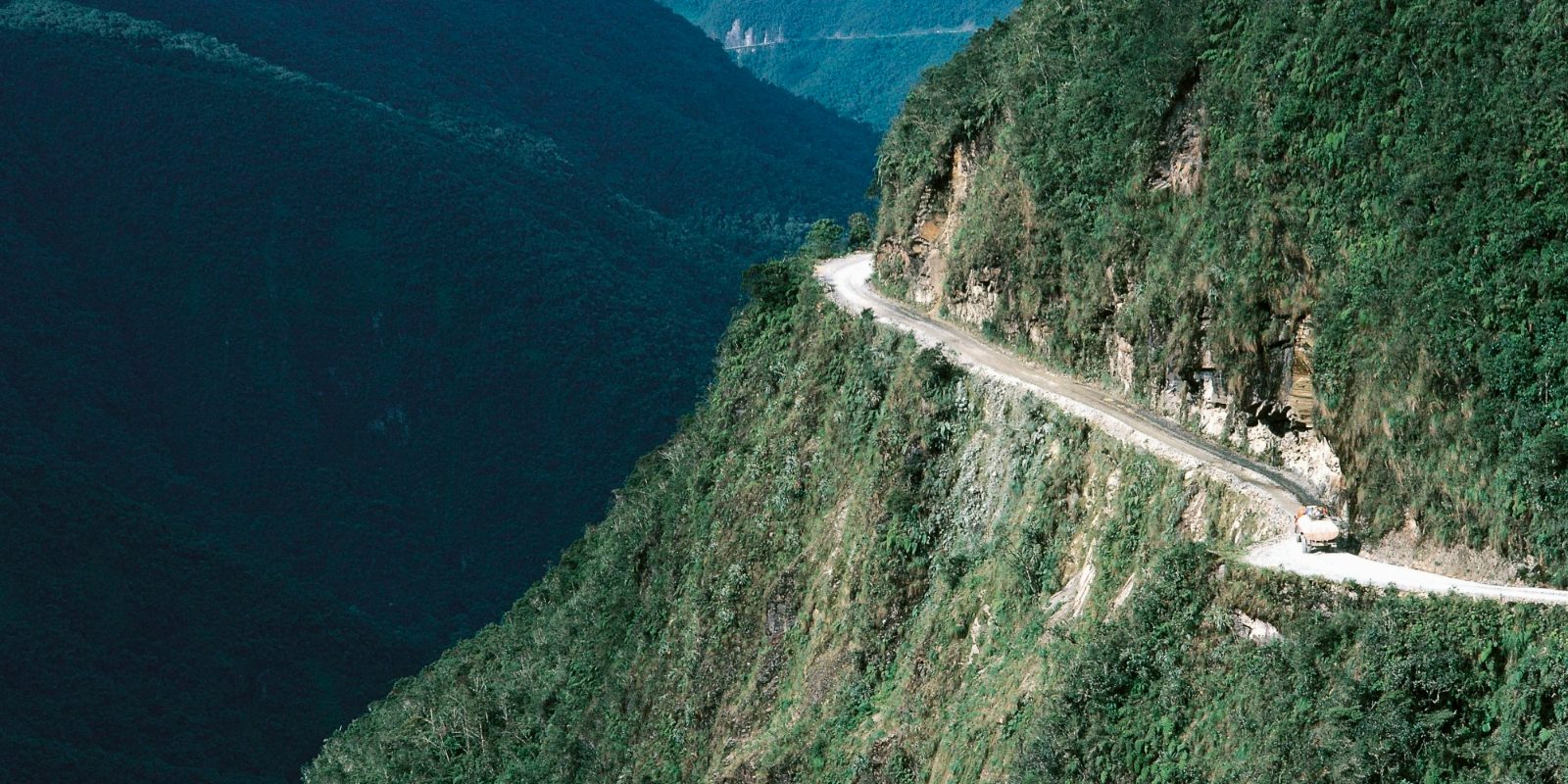
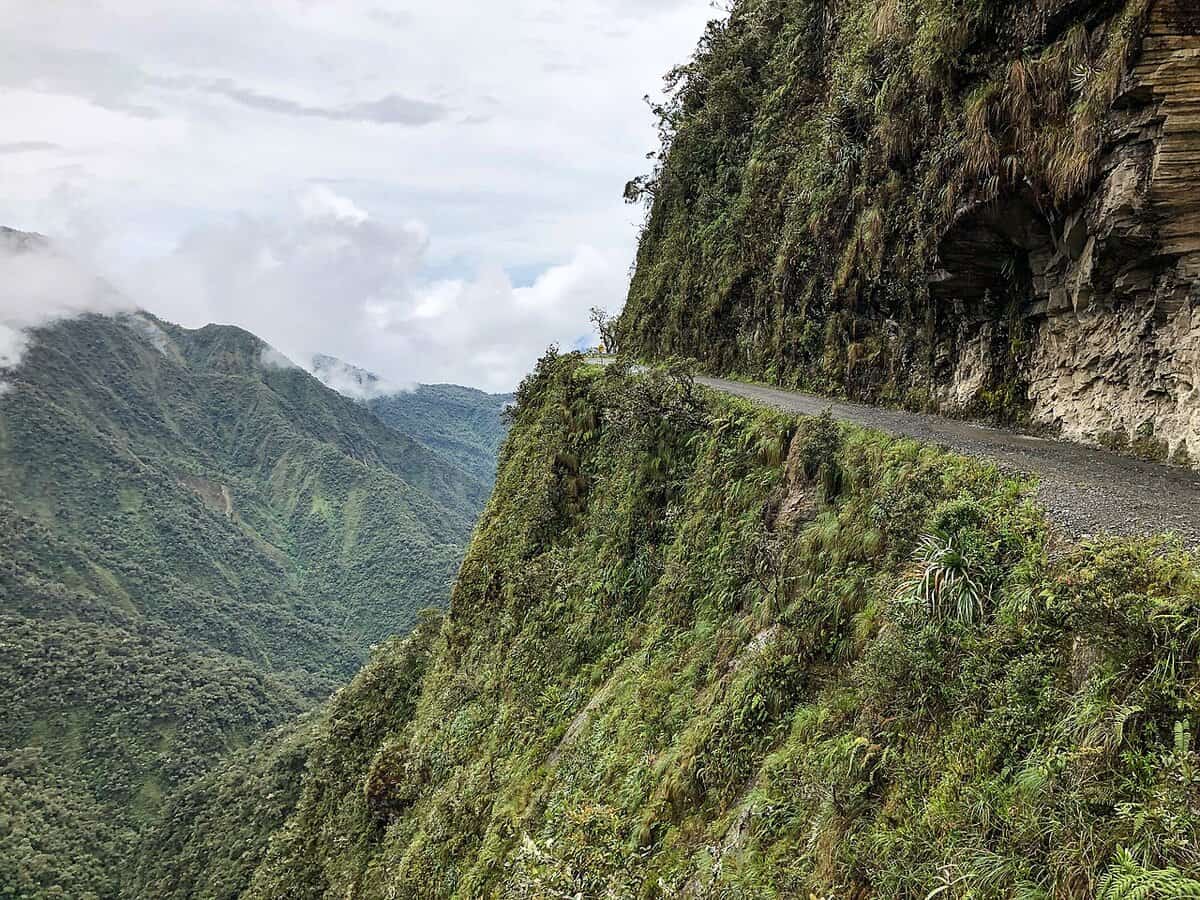
A signature feature of the route with narrow, winding sections and vertical drops of up to 600 meters.

Yolosita Village

Yolosita Village

The lush, tropical endpoint of the ride where the environment shifts completely from alpine cold to jungle heat.

Senda Verde Sanctuary

Senda Verde Sanctuary

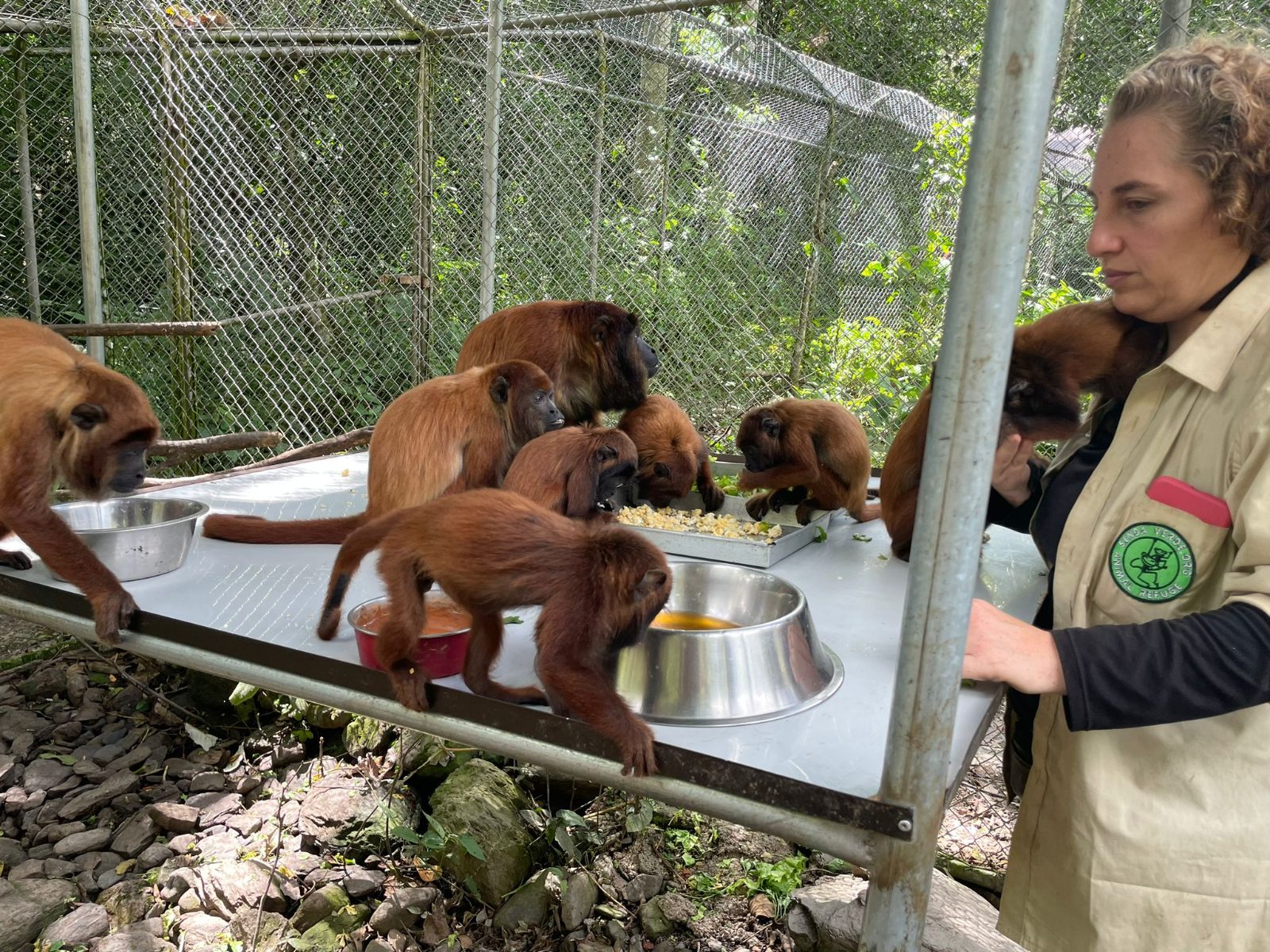
A wildlife refuge often included in tours where riders can relax, shower, and observe rescued Amazonian animals.

The experience

What visiting Death Road Bike is really like

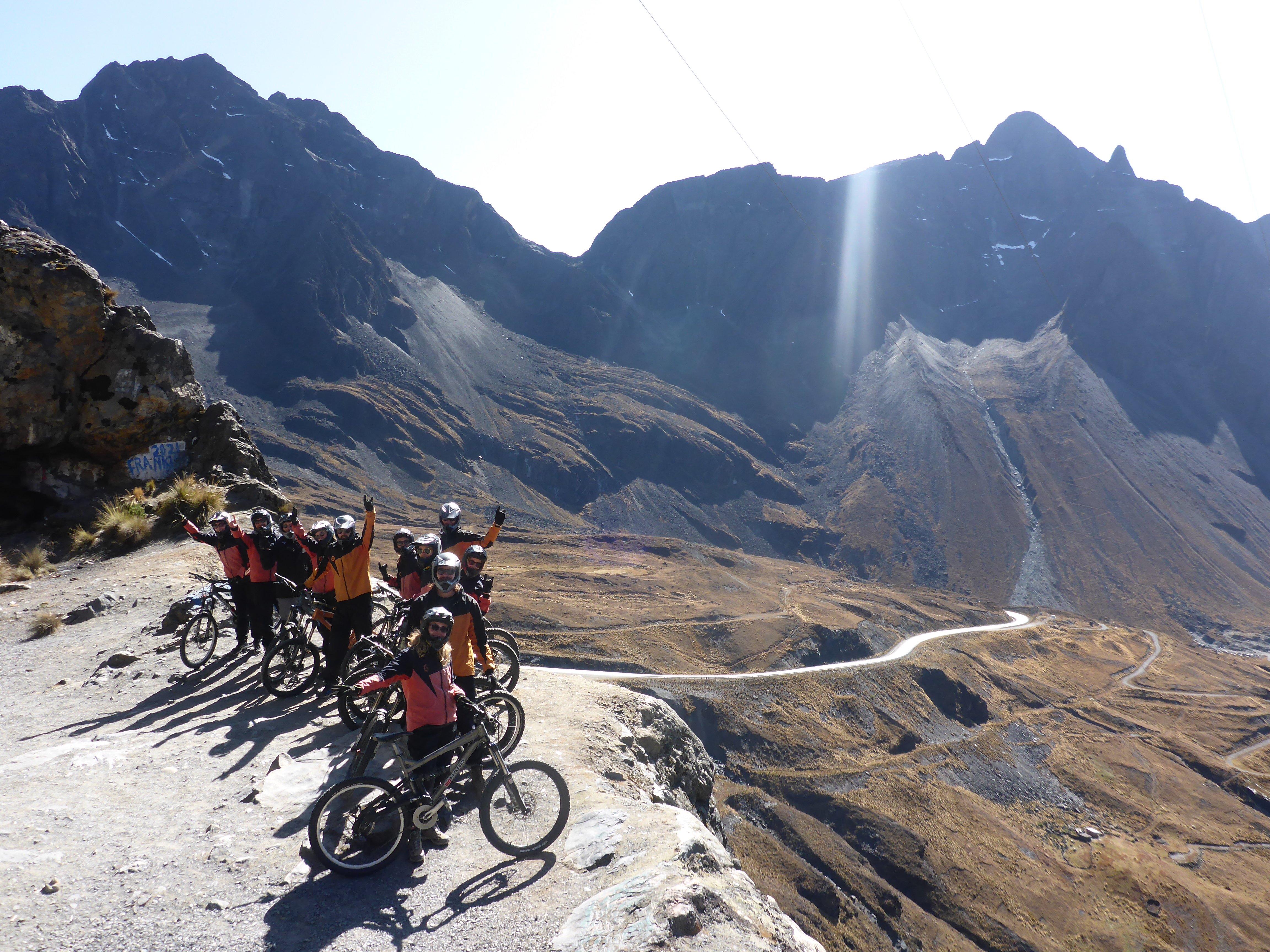
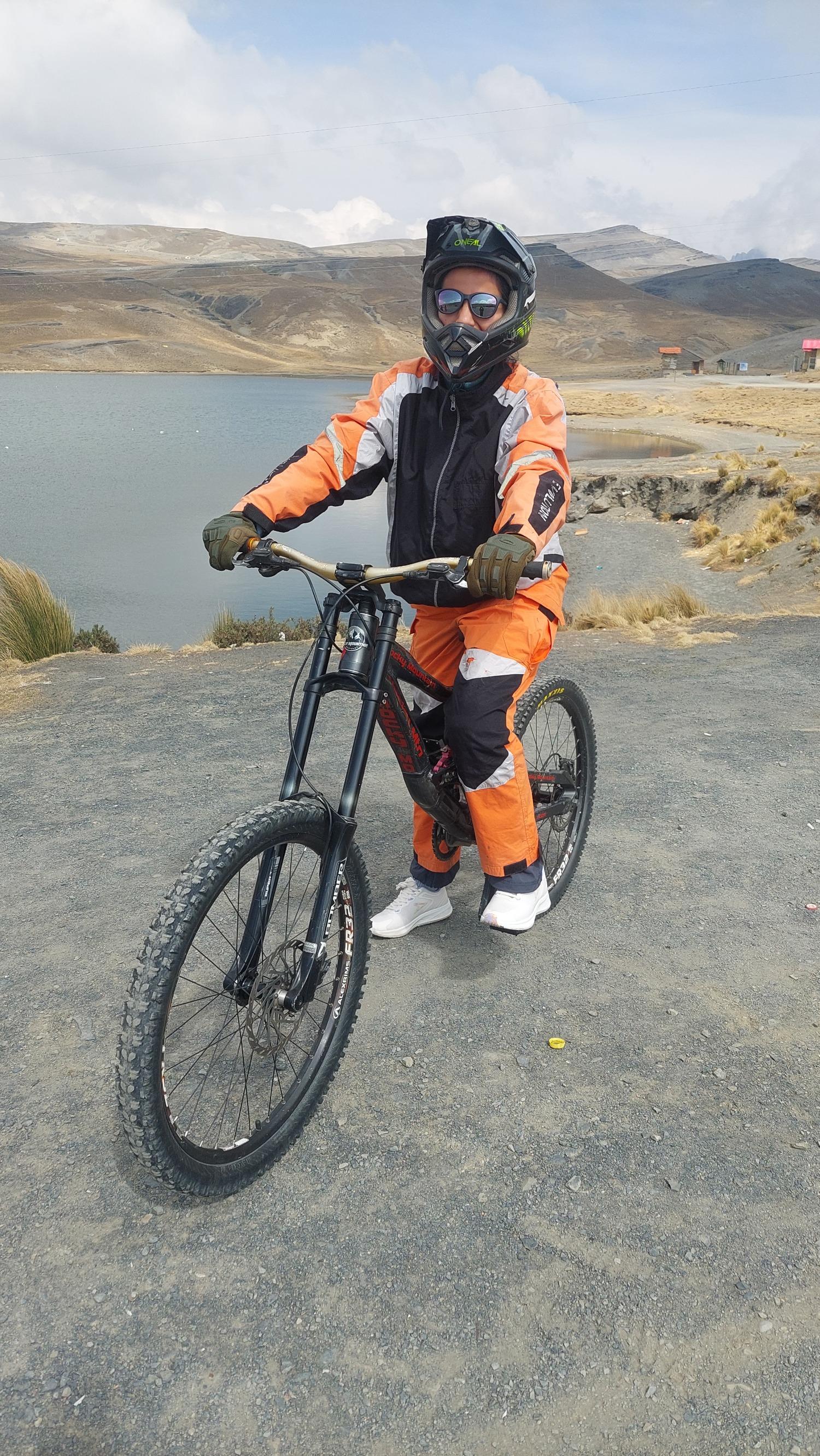
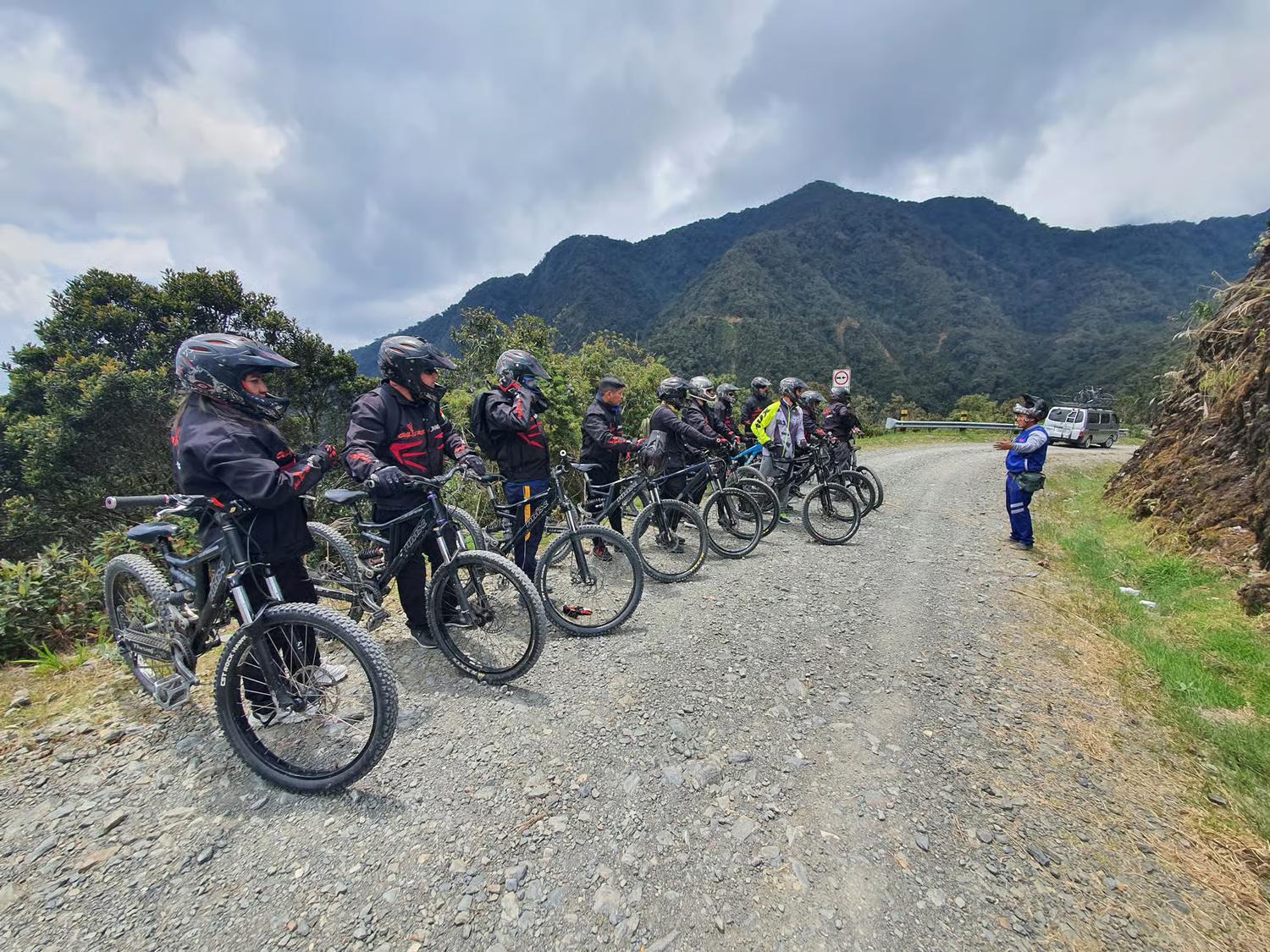
You leave La Paz in the dark and climb to La Cumbre at 4,650 metres, where the air is thin and the ground is often frosted. You fit the helmet, gloves and armoured jacket, test both brakes against a wheel, and take the first twenty kilometres on smooth asphalt while your hands learn the levers.

Read more Show less

The best arrival window is 07:00–10:00, which avoids mid-day fog and maximises visibility for the descent.

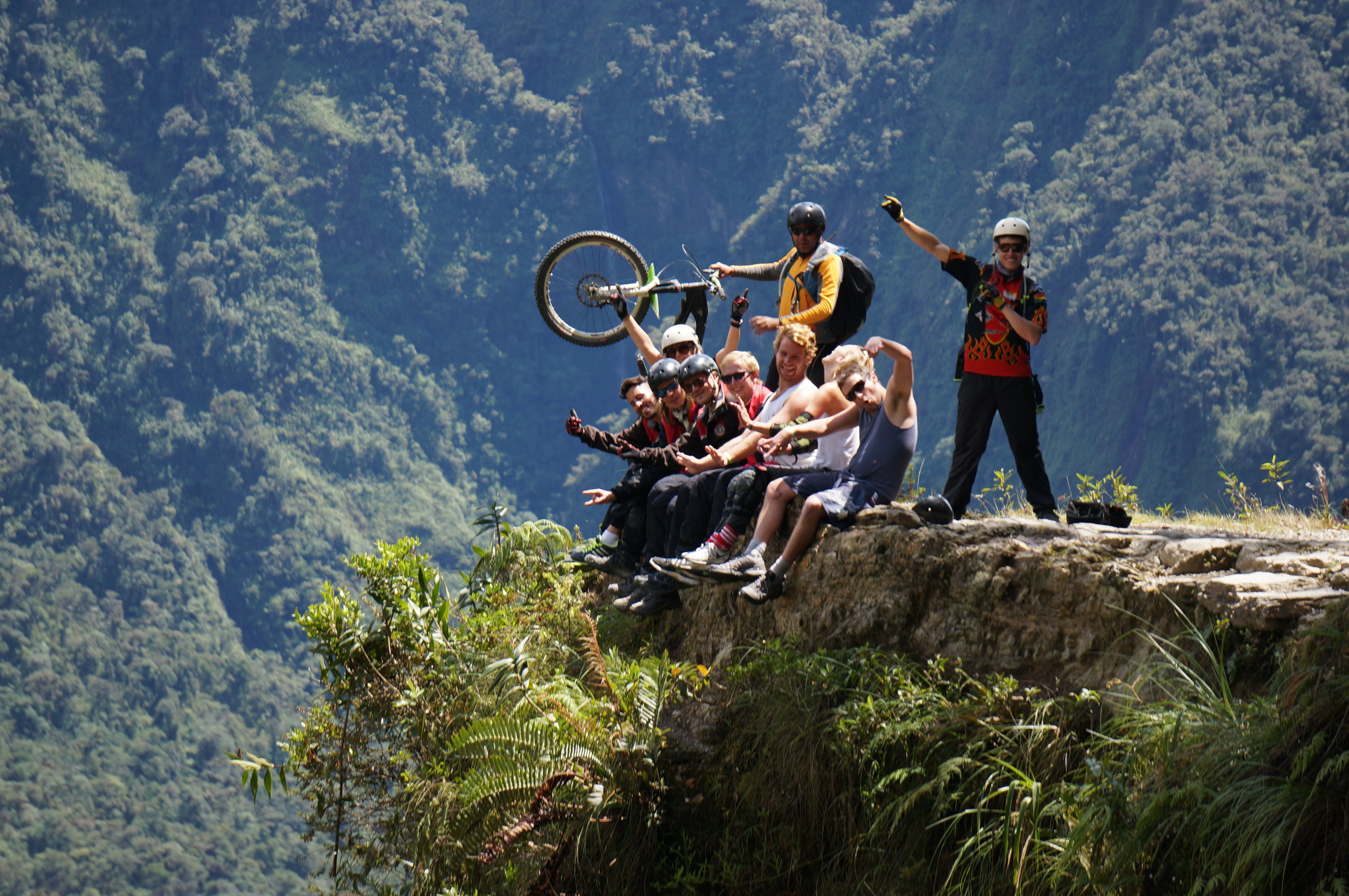
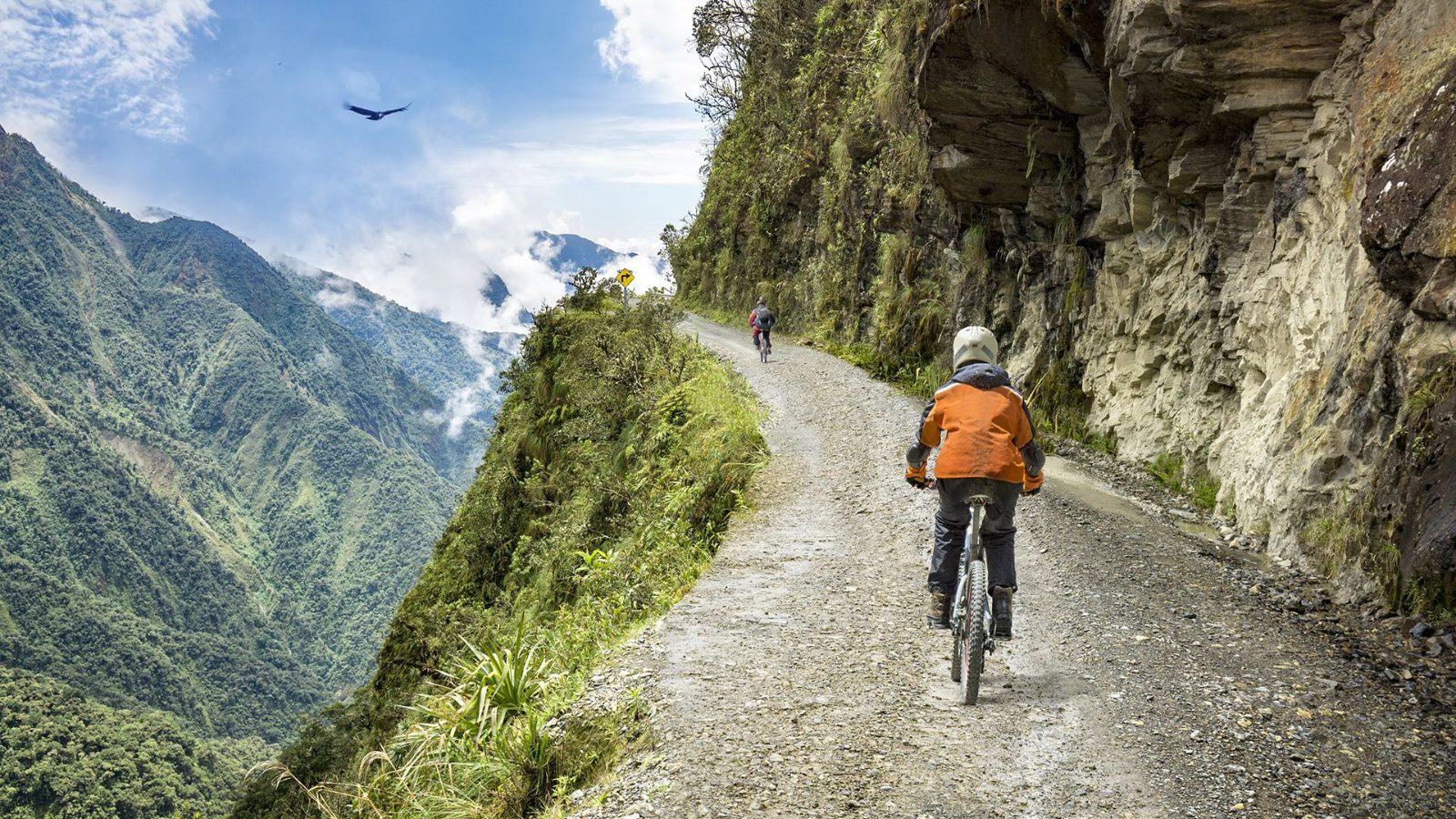
At the entrance checkpoint you pay 50 BOB — a conservation fee, per person — and the surface changes underneath you. Gravel now, red and loose, with the cloud forest pressing in from the right and nothing at all on the left. You ride the outer edge, as the old rule demands. You stop at Postal Corner for the view down the gorge, pass under a waterfall that soaks your shoulders, and pause at the shrines where the switchbacks tighten. Guides on any well-run death road bike ride bolivia group will regroup you every few kilometres.

By late morning the temperature has climbed twenty degrees. You reach Yolosa at roughly 1,200 metres, shake the dust out of your collar, and find that the route is open every day, 00:00–23:59, though nobody sensibly rides it in the dark. The death road bike tour ends with a river swim and a plate of hot food.

Death Road Bike Tour
Everything You Need to Know

Your complete Death Road Bike guide

All the details about your upcoming adventure in one place

Death Road Bike Tour: Yungas Descent Essentials

A death road bike tour drops you from the chilly La Cumbre pass at 4,650 metres down the Old Yungas Road to the humid subtropics near Coroico, some 3,500 metres of descent across roughly 64 kilometres of asphalt and gravel. Operators running Camino de la Muerte cycling trips supply full-suspension bikes, helmets, gloves and body armour, with a support vehicle trailing the group the whole way. Riders on La Paz mountain biking tours pass waterfalls, cliffside switchbacks and cloud forest, finishing with a shower and lunch at an animal refuge or riverside lodge.

In 1995, the Inter-American Development Bank named a single 64-kilometre stretch of Bolivian gravel the most dangerous road in the world, and the label has outlived the traffic it described.

North Yungas Road was cut into the Cordillera Oriental in the 1930s by Paraguayan prisoners of war, hand-carved into schist above a valley that falls away for six hundred metres in places. For decades it was the only link between La Paz and the coca-growing lowlands of the Nor Yungas province. Buses and cargo trucks passed each other on a shelf barely three metres wide, with the downhill vehicle obliged to take the outer edge.

That changed in 2006, when a modern bypass opened on the far side of the gorge. The old carriageway emptied almost overnight. What remains is a near-traffic-free descent that drops roughly 3,500 vertical metres from La Cumbre pass at 4,650 metres to the town of Yolosa at around 1,200, and the modern death road bike tour exists because of that abandonment rather than in spite of it. The route is now managed as a conservation corridor; a 50 BOB conservation fee, per person, payable at the entrance checkpoint, funds its upkeep.

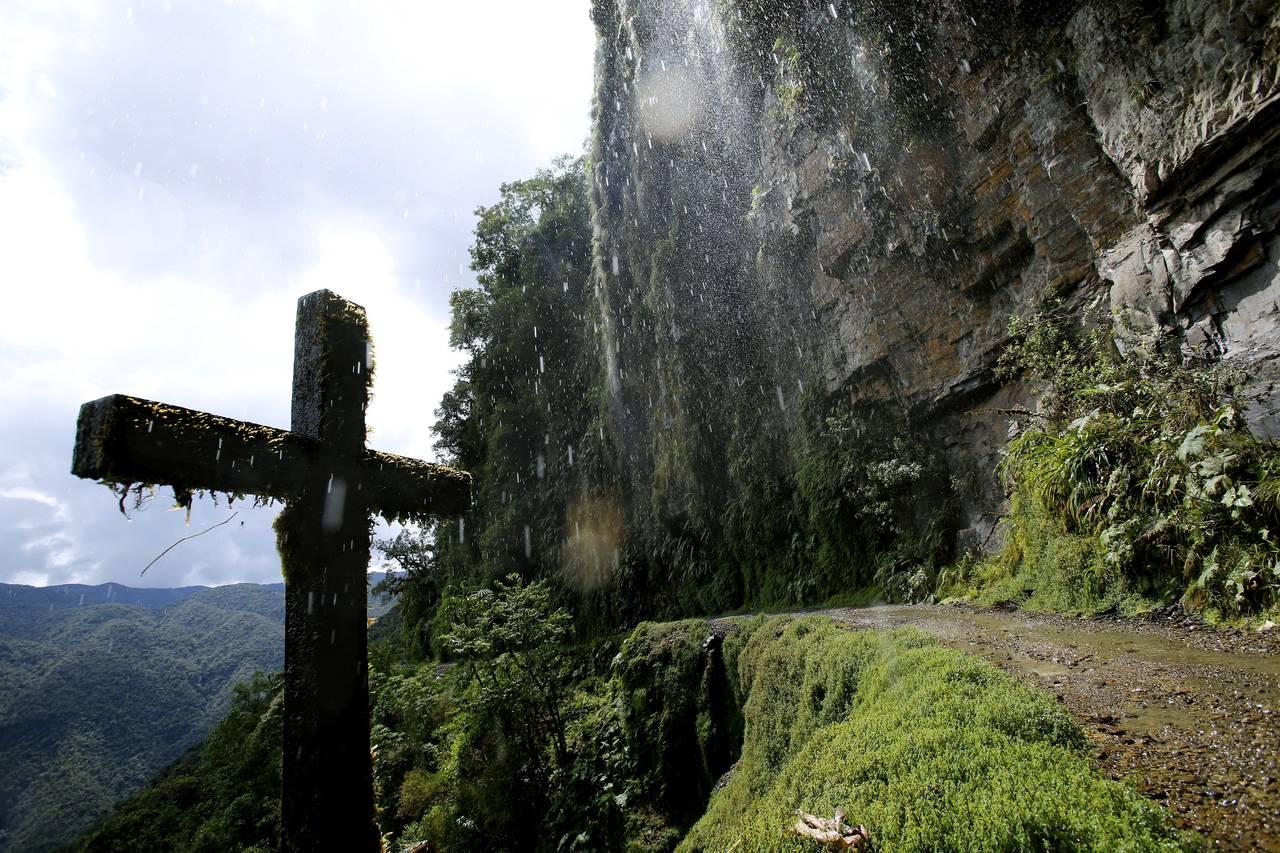
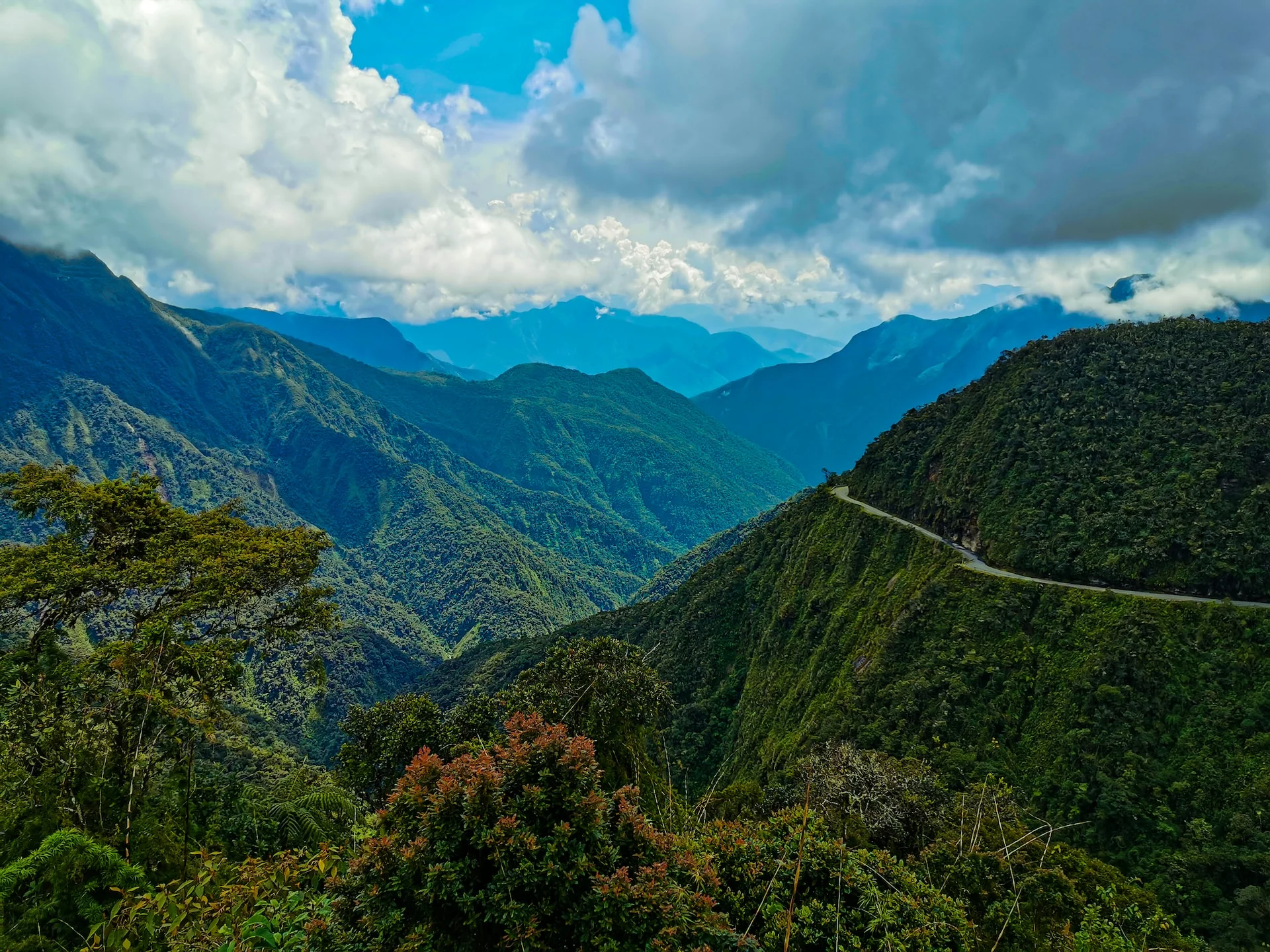
The engineering is worth reading as you go. Waterfalls cross the carriageway unbridged. Retaining walls are dry-stacked stone rather than concrete. Roadside crosses and small shrines mark the worst switchbacks, and the surface shifts from asphalt on the upper páramo to loose red laterite once the cloud forest closes in. Ecologically, the descent crosses four distinct life zones in a morning: high-altitude puna, elfin forest, montane cloud forest, and subtropical valley. Birders record barred fruiteaters and Andean cock-of-the-rock along the lower switchbacks.

The route's cultural weight has grown with its reputation. Searches for a death road bike ride, threads on death road bike tour reddit, and the steady traffic of death road bike ride bolivia enquiries all point at the same corridor. Local operators in La Paz built an entire cycling economy around it after 2006, and the death road bike tour la paz departure has become one of Bolivia's defining travel rituals. Address: North Yungas Road, La Paz Department, Bolivia — a line that now belongs less to freight logistics than to the country's outdoor imagination.
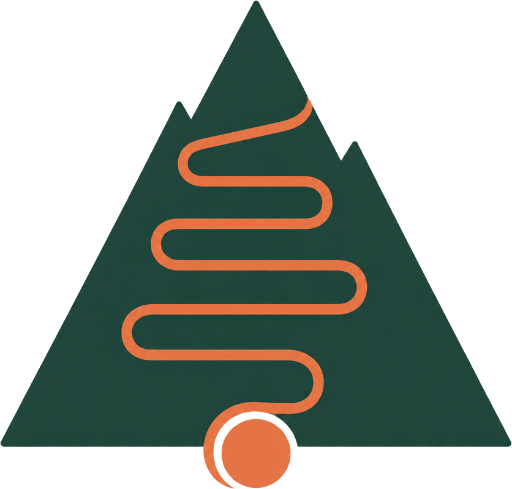

The old carriageway emptied almost overnight, and what replaced the trucks was a bicycle.

Dress code

Wear layers to accommodate the transition from freezing Andean peaks to the humid, tropical Yungas valley. Specialized gear such as helmets, gloves, and protective jackets is typically provided by your tour operator.

Bags & security

Secure your personal belongings in the support vehicle that follows your group. Avoid carrying heavy backpacks while riding to maintain better balance and control on narrow sections.

Photography

Use waterproof housings for cameras, as waterfall spray is common. Ensure your hands remain on the handlebars at all times while moving, using designated stops for photos.

Families & strollers

Operators generally require participants to be at least 10–12 years old. Confirm age requirements with your chosen provider before booking your death road bike tour.

Accessibility

The descent requires a moderate level of fitness and confidence on a bicycle. It is not suitable for those with severe vertigo or limited mobility.

Food & drink

Most tour packages include breakfast and lunch, often hosted at an animal sanctuary or hotel near the end of the route. Carry extra water and high-energy snacks like fruit or chocolate.

Not allowed

× Alcohol × Drugs × Loose-fitting scarves × Open-toed shoes × Unsecured loose items × Non-essential heavy electronics × Large hard-shell suitcases

What to bring

✓ Cash for 50 BOB fee ✓ Sunscreen ✓ Sunglasses ✓ Waterproof jacket ✓ Small towel ✓ Sturdy trainers ✓ Camera with strap

Opening hours

Mon 00:00–23:59
Tue 00:00–23:59
Wed 00:00–23:59
Thu 00:00–23:59
Fri 00:00–23:59
Sat 00:00–23:59
Sun 00:00–23:59

How to get there

At a glance

Opening Hours

00:00–23:59

Address

North Yungas Road, La Paz Department, Bolivia

Arrival Advice

07:00–10:00

Weather

Climate changes from cold high-altitude to hot jungle

Storage

Most operators store bags in support vehicles

Route

64 km descent from La Cumbre

Cancellation policy

Rescheduling and cancellations are generally handled directly by tour operators. Confirm specific refund terms at the time of booking, noting that the 50 BOB conservation fee is a mandatory local payment separate from tour costs.

Plan your time

Death Road Bike Ride Duration and Timing

Recommended time

Full day (approximately 10–12 hours)

A death road bike tour requires a full commitment, as most groups spend the morning traveling from La Paz before beginning the high-altitude descent. Expect the ride to take several hours, including safety briefings and mandatory stops at the entrance checkpoint to pay the 50 BOB conservation fee. If you book death road bike tour tours, the timeline usually accounts for lunch and equipment maintenance, while death road bike tour tour logistics prioritize road safety over speed. Securing death road bike tour tickets early helps ensure your guide manages the descent while traffic remains minimal.

Crowd levels through the day

07:00–09:00 Light
09:00–11:00 Moderate
11:00–14:00 Heavy
14:00–17:00 Moderate
17:00–20:00 Light
The story

The Somber History of the Death Road Bike Tour

The North Yungas Road was cut into the eastern Andes in the 1930s, during the Chaco War between Bolivia and Paraguay. Paraguayan prisoners of war supplied much of the labour. They worked with hand tools on cliffs that fall more than 600 metres to the Coroico River. The route linked La Paz with the humid Yungas valleys, carrying coca, coffee and citrus toward the capital. Its purpose was commerce, not recreation. The men who built it are largely unnamed in the record. For six decades the road served as the only artery between the altiplano and the northern lowlands. Single-lane sections, no guardrails, and a local rule forcing downhill vehicles to the outer edge made collisions frequent. In 1983 a bus left the road near Chulumani, killing over 100 passengers, one of the worst road disasters in Bolivian history. In 1995 the Inter-American Development Bank labelled the route the world's most dangerous road, a phrase that fixed its reputation abroad. Estimates from that decade put annual fatalities between 200 and 300. Roadside crosses and small shrines still mark the worst curves, and they remain the most affecting feature encountered on any death road bike tour. The transformation began in 1998, when New Zealander Alistair Matthew ran the first commercial descents by mountain bike. Cyclists were rare then; trucks were not. Everything changed on 21 December 2006, when the Bolivian government opened a modern bypass on the opposite slope, complete with asphalt, two lanes and drainage. Freight traffic vanished almost overnight. The old track was left to gravel, waterfalls and cyclists, and Yungas Road tours became the region's defining adventure product. What survives today is a working monument. The 64-kilometre descent from La Cumbre pass at 4,650 metres to Yolosa at roughly 1,200 metres passes cloud forest, tunnels of vegetation and the memorial plaques of riders who misjudged the edge. Sales of death road bike tour tickets now sustain guides, cafés and hostels in Coroico. Operators of the Camino de la Muerte still brief every group beside a cross. History here is not interpreted at a distance; a death road bike tour tour rides directly over it, and reputable death road bike tour tours treat that fact as the point.

1932–35

Paraguayan prisoners of war captured during the Chaco War carve the North Yungas Road into the cliffs above the Coroico River.

1930s–80s

The single-lane route becomes the only link between La Paz and the Yungas, moving coca, coffee and citrus to market.

1983

A bus plunges from the road near Chulumani, killing more than 100 people in one of Bolivia's deadliest road disasters.

1995

The Inter-American Development Bank names it the world's most dangerous road, with annual deaths estimated at 200 to 300.

1998

New Zealander Alistair Matthew leads the first commercial mountain-bike descents, sharing the gravel with freight trucks.

2006

A modern two-lane bypass opens on 21 December, diverting nearly all vehicle traffic away from the old road.

2007–2019

Cycling replaces cargo as the road's main use, and Coroico and Yolosa build an economy around visiting riders.

2026

The 64-kilometre descent from La Cumbre to Yolosa operates daily, with a 50 BOB conservation fee collected at the entrance checkpoint.

Photo spots

Top Photography Locations on Your Death Road Bike Tour

The Cliff Edge Drop-off

The Cliff Edge Drop-off

Best light · Before 09:00

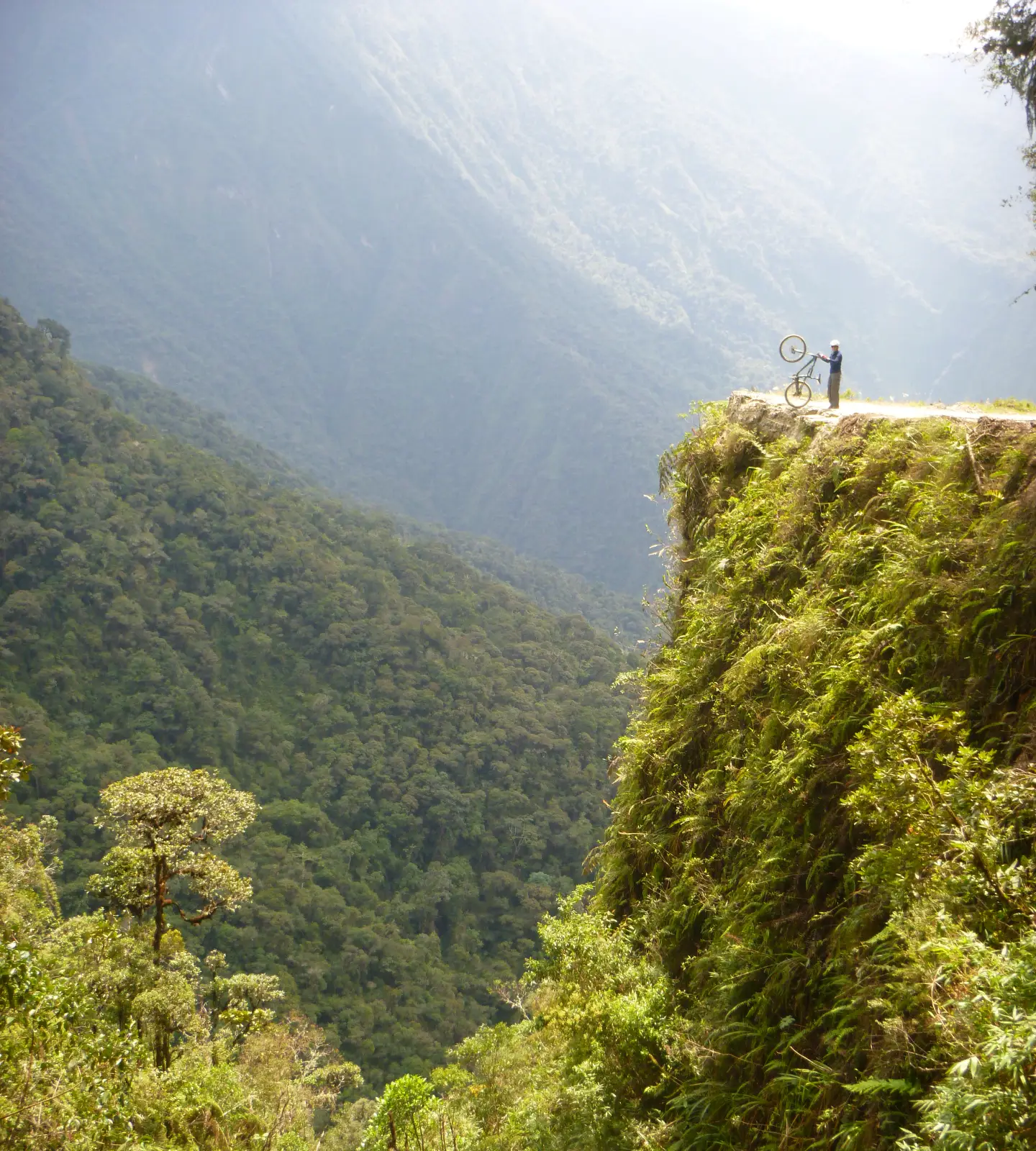
Position yourself at the widest section of this narrow passage to capture the sheer verticality of the canyon. A low angle shot here emphasizes the depth of the valley floor below as part of your death road bike tour.

San Juan Waterfall Crossing

San Juan Waterfall Crossing

Best light · Early morning light

This area allows you to capture the water cascading directly onto the road surface. Stand near the inner rock wall to get a clear perspective of riders moving through the mist.

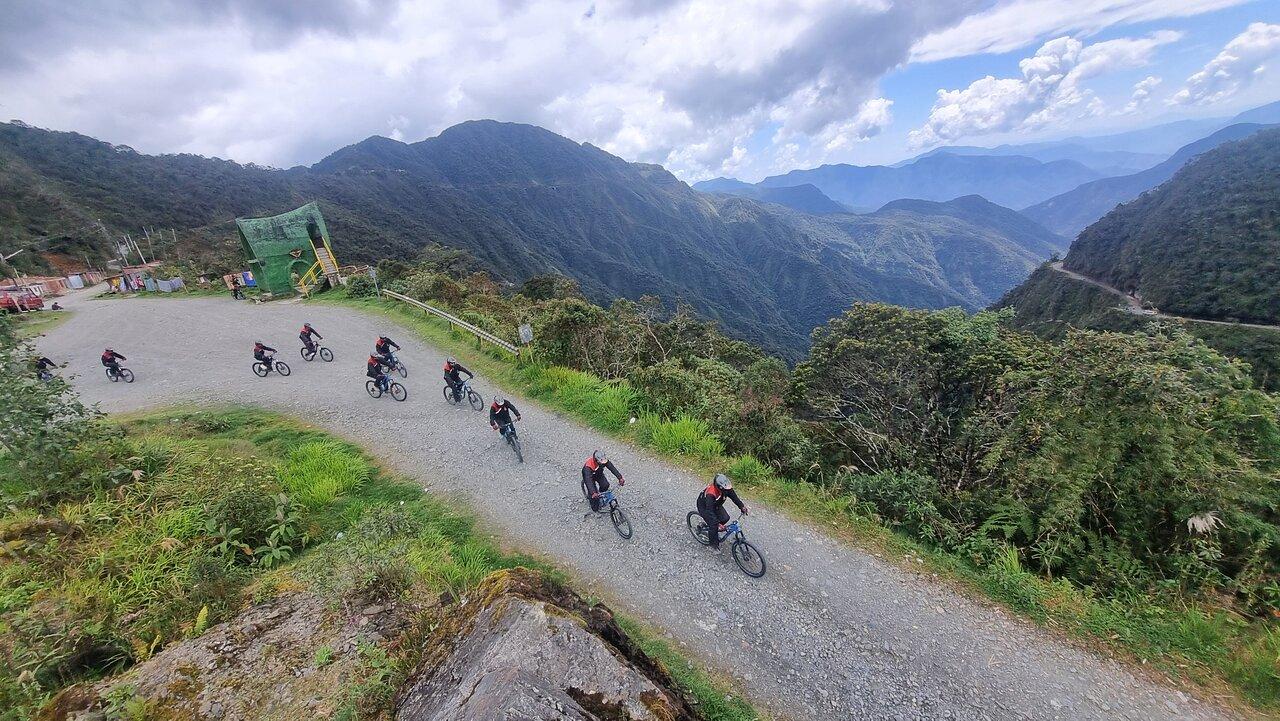
The Hairpin Bend

The Hairpin Bend

Best light · Golden hour

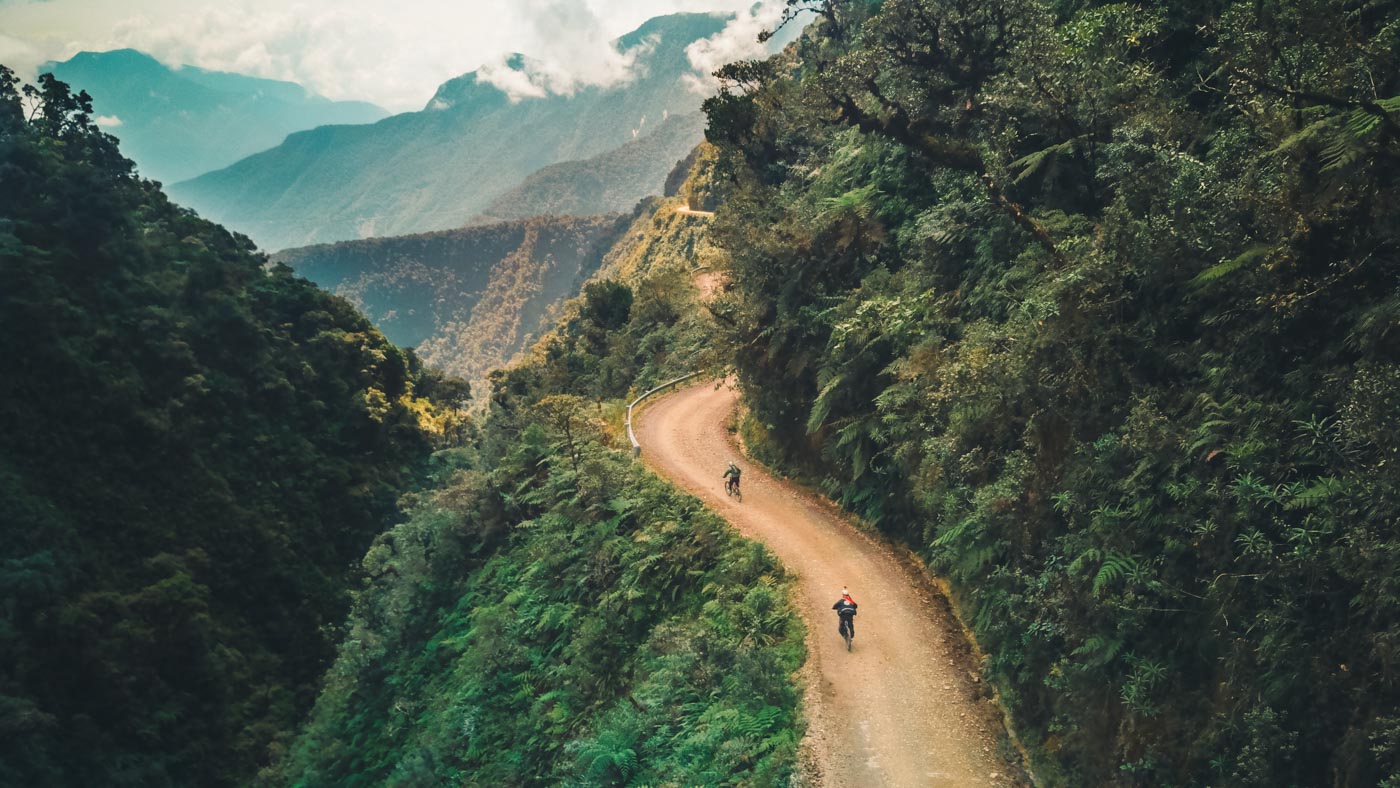
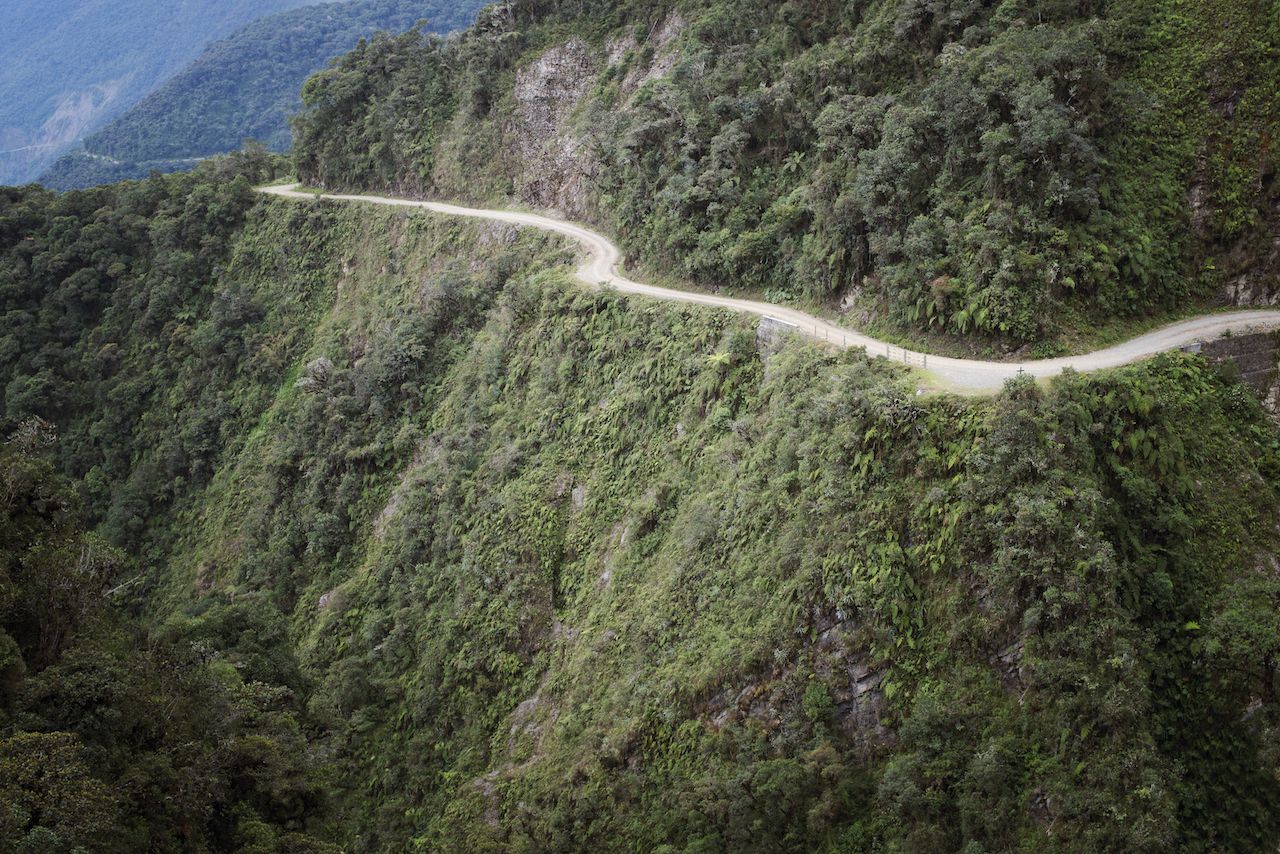
Located at a sharp switchback, this spot provides a wide view of the route winding into the distance. It is an ideal location for capturing group shots showing the scale of the landscape found on death road bike tour tours.

The Guardrail Lookout

The Guardrail Lookout

Best light · Mid-morning

This vantage point offers a rare moment of safety where you can photograph the dramatic mountain terrain without blocking the path. It serves as a visual contrast to the more dangerous sections of a death road bike tour tour.

The Control Checkpoint

The Control Checkpoint

Best light · Morning

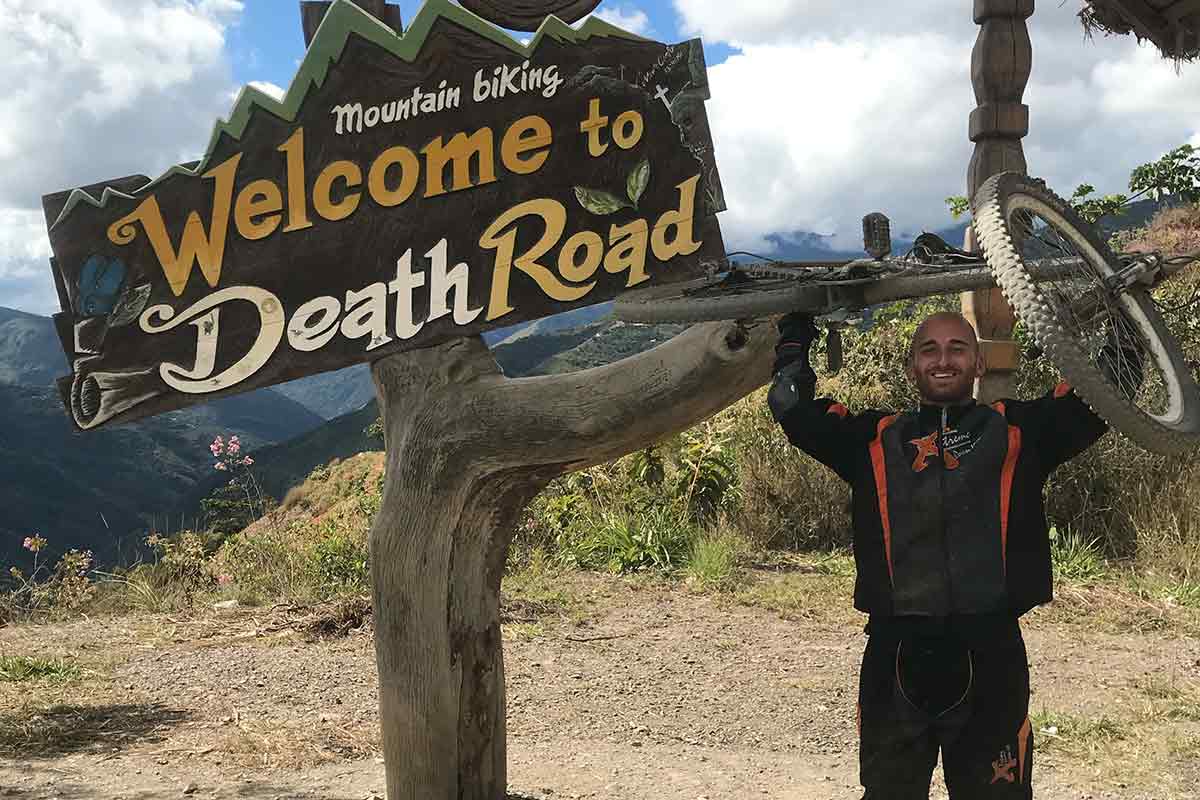
At this location, you can photograph the entry point where riders often pause to show their death road bike tour tickets. Frame the shot to include the wooden signage against the backdrop of the dense forest.

Gallery

Moments from Death Road Bike

Customer Reviews

What travelers say about Death Road Bike

Real experiences from real travelers

4.5
Based on 2,400 reviews
1 ★ 910
2 ★ 640
3 ★ 1250
4 ★ 4100
5 ★ 16800
M
Marisol T.
Spain · 2026-07-28

Gravel and cloud forest

We started at La Cumbre in freezing fog and finished in Yolosa sweating through our shirts, which nobody warned me about properly. The death road bike tour covers something like 3,500 metres of descent and you feel every climate zone on the way down. Our guide stopped at every blind corner to explain the line before we rode it.

D
Daniel K.
Germany · 2026-06-14

Brakes matter more than nerve

The tarmac section from La Cumbre is fast and smooth, then the gravel of the old Yungas Road starts and everything slows right down. Wet rock, moss, and a waterfall that soaks you at about the halfway point. Bike quality is the thing to check before booking anything.

A
Aiko N.
Japan · 2026-05-03

Cloud forest descent

Riding downhill into the Yungas with the valley filling with mist below was the part I keep thinking about. Our group of nine stayed tight and the support van leapfrogged ahead at each stop. I am not a confident mountain biker and I never felt pushed.

O
Owen R.
United Kingdom · 2026-04-19

Good day, dusty finish

Dry season means dust rather than mud, so bring a buff for your face. The North Yungas Road cycling route is genuinely narrow in places and the drop on your left is unfenced, which focuses the mind. Only mark down because our second bike had soft rear brakes and it took a while to sort.

C
Camila F.
Brazil · 2026-03-30

Worth the early start

We were picked up in La Paz before sunrise and the light coming over the Cordillera Real at La Cumbre was worth the alarm on its own. Booked death road bike tour tickets a week ahead in high season and that seemed about right. Photos at every stop, and the guide knew where the good angles were.

P
Peter H.
Netherlands · 2026-02-11

Steady and well run

Twelve of us, two guides, one at the front setting pace and one sweeping. The gravel switchbacks below Chuspipata are where you actually notice the exposure. Warm humid air by the time we hit the Coroico turnoff, birds everywhere, completely different world from the altiplano.

S
Sofia L.
United States · 2025-12-06

Rain gear is essential

We rode in light rain and the old road turned slick and dark under the tyres. Plenty of death road bike tour tours are on offer in La Paz and the cheap ones show it in the equipment, so pay attention to what you are getting. Full-face helmet, gloves, and a proper jacket made the difference for us.

M
Mateo G.
Argentina · 2025-10-22

Andes to jungle in one ride

The contrast between the snow at the pass and the humid green at the bottom is the whole point of the descent. Our death road bike tour tour ended with a shower and a buffet near Yolosa, which after five hours on a bike felt very civilised. Mountain bikes were full suspension and in good shape.

H
Hannah B.
Australia · 2025-08-17

Loud river below

You hear the water in the gorge long before you see it, and the road surface changes constantly from packed dirt to loose rock. I would call this the best La Paz adventure activity I did in three weeks in Bolivia. Bring more water than you think, the last hour is hot.

L
Lucas M.
France · 2025-06-09

Cold start, green finish

At La Cumbre it was three degrees and hailing lightly, and two hours later I was in a t-shirt. The Camino de la Muerte descent has enough gravel sections to keep it interesting without being technical. Guides checked brakes twice before the unpaved part started.

FAQ

Death Road Bike — frequently asked questions

Everything you need to know for your journey

Ready for Adventure?

Join thousands of happy travelers who have discovered this incredible experience

Book Your Experience Now