24 hr
Death Road Mountain Biking Adventure from La Paz
- Expert local guide
- Small group
- Skip-the-line access
- Free cancellation
Death Road Bolivia Motorcycle Tour — Guided Descents from La Paz
Sixty-four kilometres of gravel above the cloud, one road falling to green.
Compare fares, pick the fit — all bookings are mobile-voucher and eligible for free cancellation where shown.
24 hr
24 hr
12 hr
Navigating the descent requires selecting the right death road bolivia motorcycle tour, which varies between professional guided excursions and independent riding setups. Choosing between a standard group bike outing or a high-performance engine-powered journey ensures you match your experience level to the terrain of the Yungas Road.
| Guided Bike Tour Standard Mountain Biking |
Top pick Guided Motorcycle Tour Motorized Expert Access |
|
|---|---|---|
| Access Type | Group descent with guide | Private/Guided motorized access |
| Vehicle Provided | Dual-suspension mountain bike | Dual-sport adventure motorcycle |
| Conservation Fee | 50 BOB per person | 50 BOB per person |
| Experience Level | Beginner to intermediate | Advanced riders only |
| Best For | First-timers seeking safety | Experienced riders seeking power |
| See tickets & prices |
Verdict: Choose the guided bicycle option for a classic descent experience, or opt for a motorized death road bolivia motorcycle tour if you are a licensed rider seeking more speed.
Worth it for confident riders, not nervous beginners
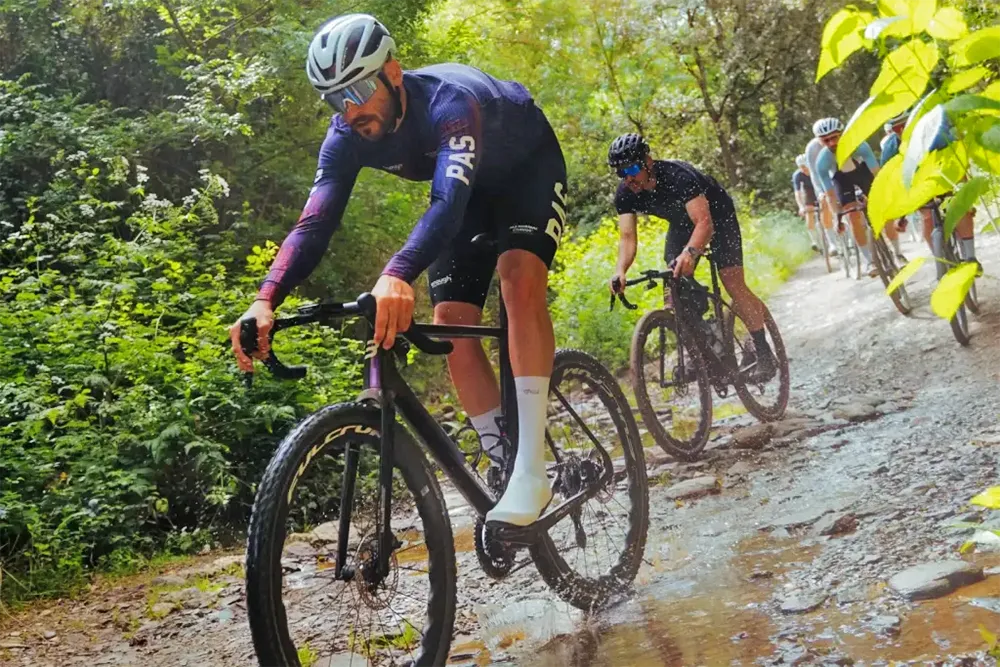
A death road bolivia motorcycle tour costs you the 50 BOB conservation fee plus the operator price shown in the grid above, and what you get back is roughly 64 km of continuous descent from Andean altiplano cold into humid Yungas cloud forest — about 3,500 metres of vertical drop on a single-track gravel shelf with no guardrail. The scenery does most of the work: waterfalls crossing the roadbed, sheer drop-offs, vegetation changing every twenty minutes. That payoff is real for riders who already handle loose surfaces and exposure without freezing. Note that the bookable inventory here is mountain bike based, including private options, so anyone specifically wanting engine-powered Yungas Road tours should confirm directly with the operator before booking. Skip it if heights genuinely frighten you, or if you want scenery without commitment — the Coroico valley viewpoints deliver similar views from a vehicle.
Bottom line: Book the death road bolivia motorcycle tour tickets if you trust your own nerve on loose gravel — otherwise your money buys fear, not a Yungas Road tour worth remembering.
They complement each other; most visitors who do both call the motor-driven descent the more intense technical challenge, while mountain biking is often cited as the definitive way to experience the landmark.
|
Top pick Motorcycle Tour |
Mountain Biking | |
|---|---|---|
| Primary focus | Throttle control & mechanical skill | Gravity-fed descent & braking control |
| Typical duration | 9 hours (full day) | 5–9 hours (full day) |
| Average price | From $230 USD | From $65 USD |
| Required experience | Expert rider status | Confident beginner level |
| Support included | 4x4 vehicle support | Dedicated support van |
| Safety priority | High-risk technical handling | Guide-led group pacing |
| See tickets & prices |
Verdict: Choose the motorcycle tour for a high-octane mechanical challenge, or opt for the classic mountain bike descent to focus on the surroundings and the iconic nature of the road.
Hand-picked experiences loved by thousands of travelers
1 day
Free Cancellation
Descend from 4,700m alpine heights to tropical jungle on Bolivia's legendary cliff-edge route
Full day (approximately 13 hours)
Free Cancellation
Tackle Bolivia's legendary downhill route through cloud forests, waterfalls, and dramatic altitude drops
11 hours
Free Cancellation
Descend over 60km from 4,700m altitude through spectacular Andean landscapes to the tropical valleys
Full day
Free Cancellation
Descend one of the world's most infamous routes on a thrilling mountain bike journey from the Andes to tropical valleys
Full day (approximately 10 hours)
Free Cancellation
Bike from 4,700m high-altitude peaks down through cloud forest to tropical jungle on Bolivia's notorious mountain route
3 days
Free Cancellation
Pedal down Bolivia's legendary mountain highway, then explore the world's largest salt desert on this 3-day expedition
1 day
Free Cancellation
Tackle one of the world's most notorious downhill routes on a thrilling full-suspension bike journey
Start from La Paz toward La Cumbre pass
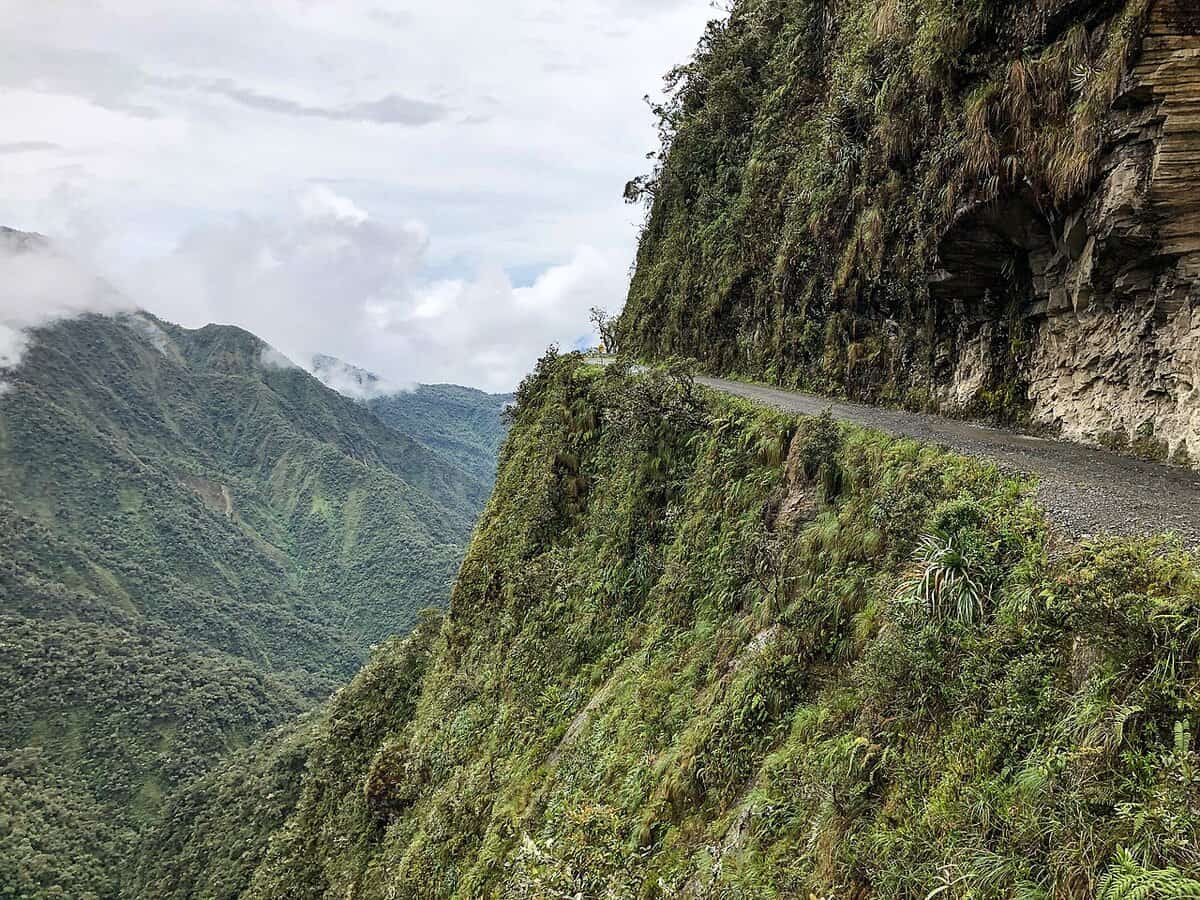
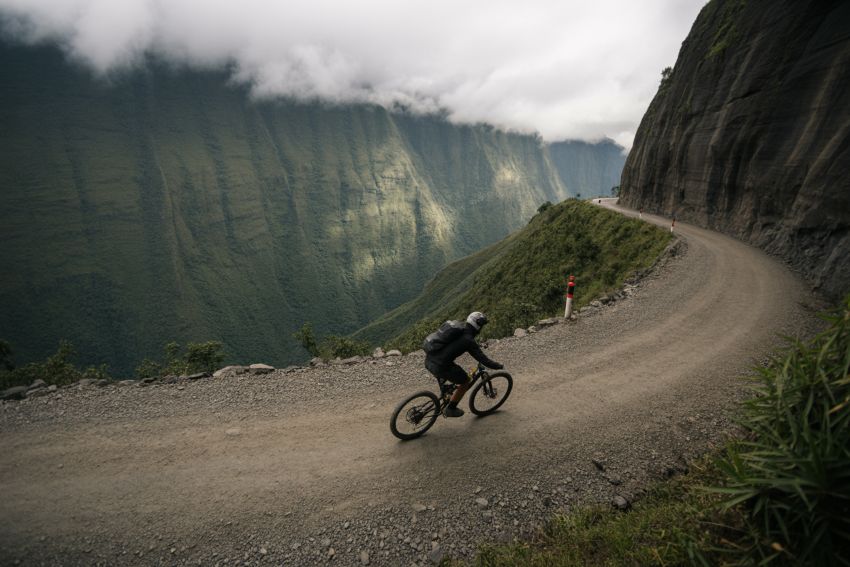
Navigate the narrow cliff-side segments
Finish tour near Coroico
Narrow curve with steep vertical drops requiring careful navigation
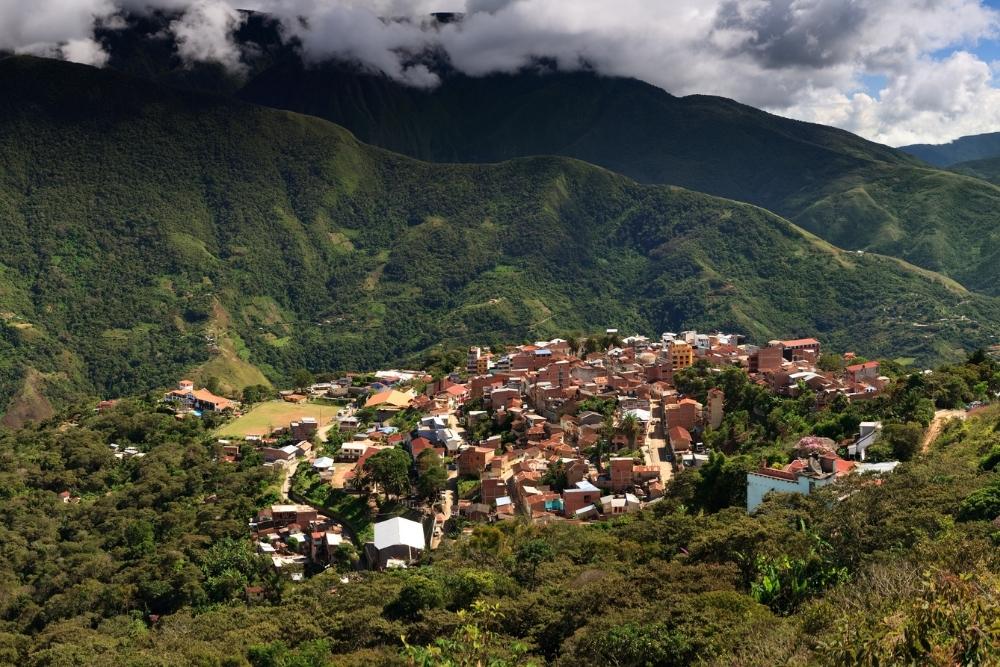
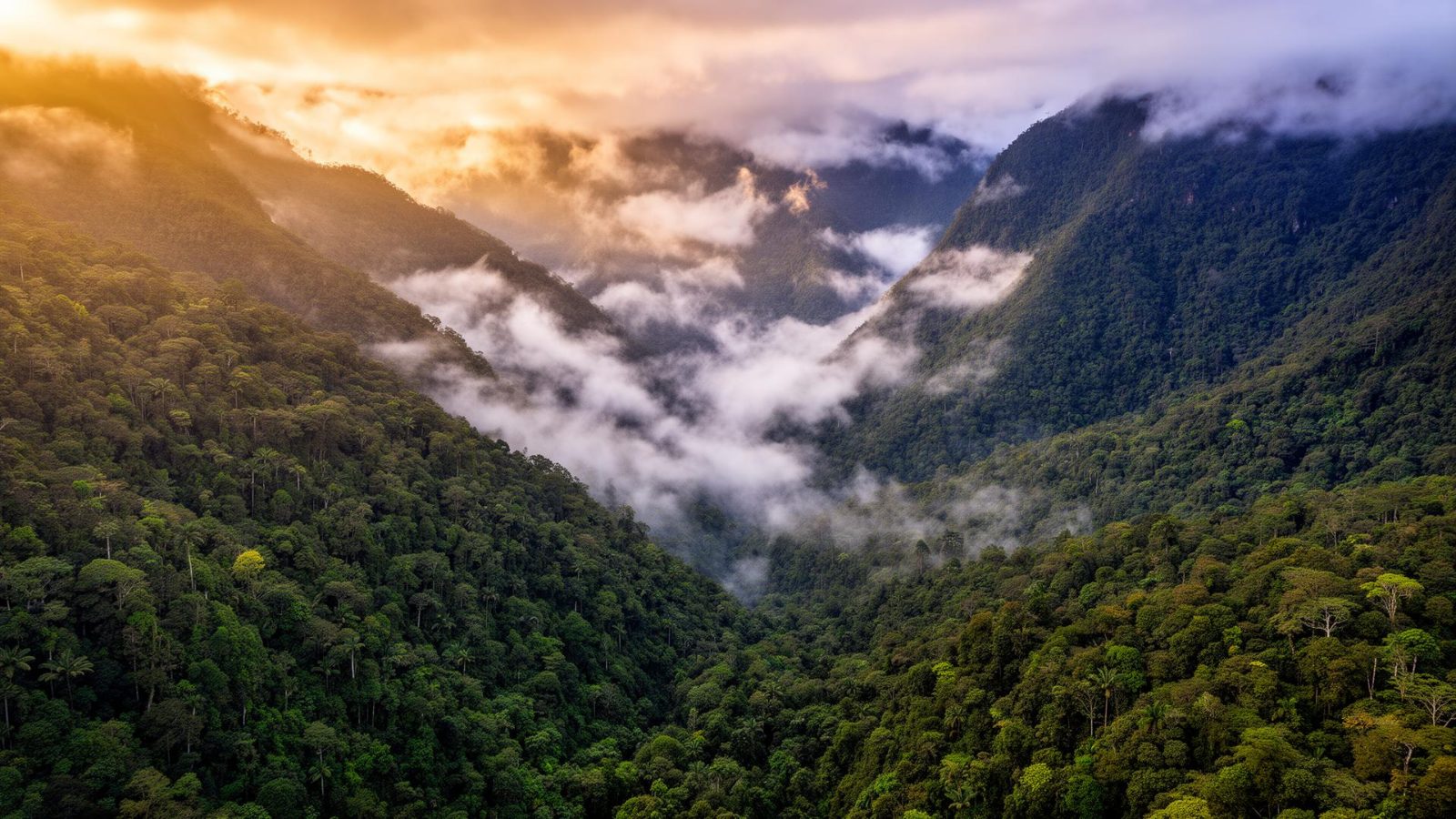
Provides views of the surrounding cloud forest valley
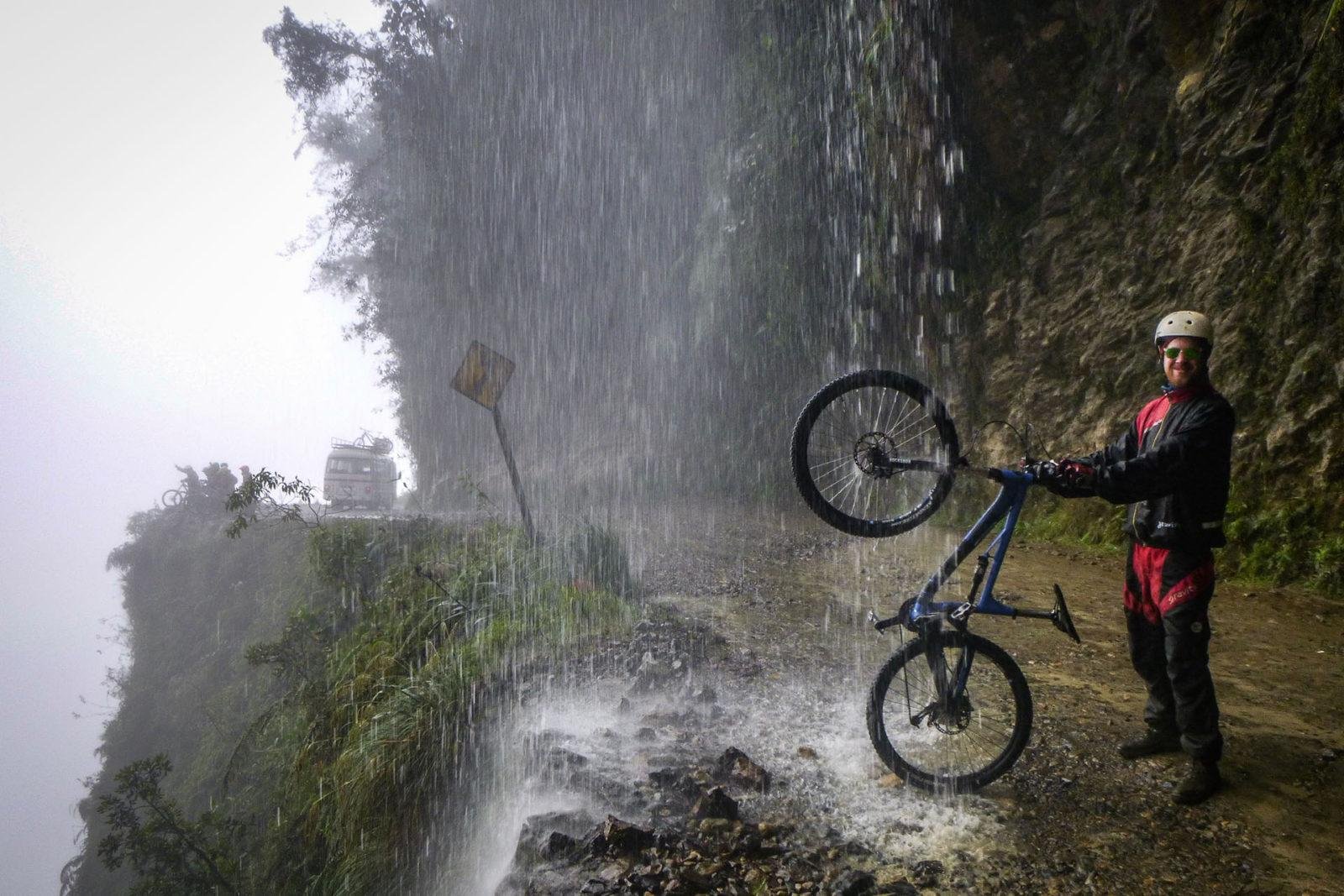
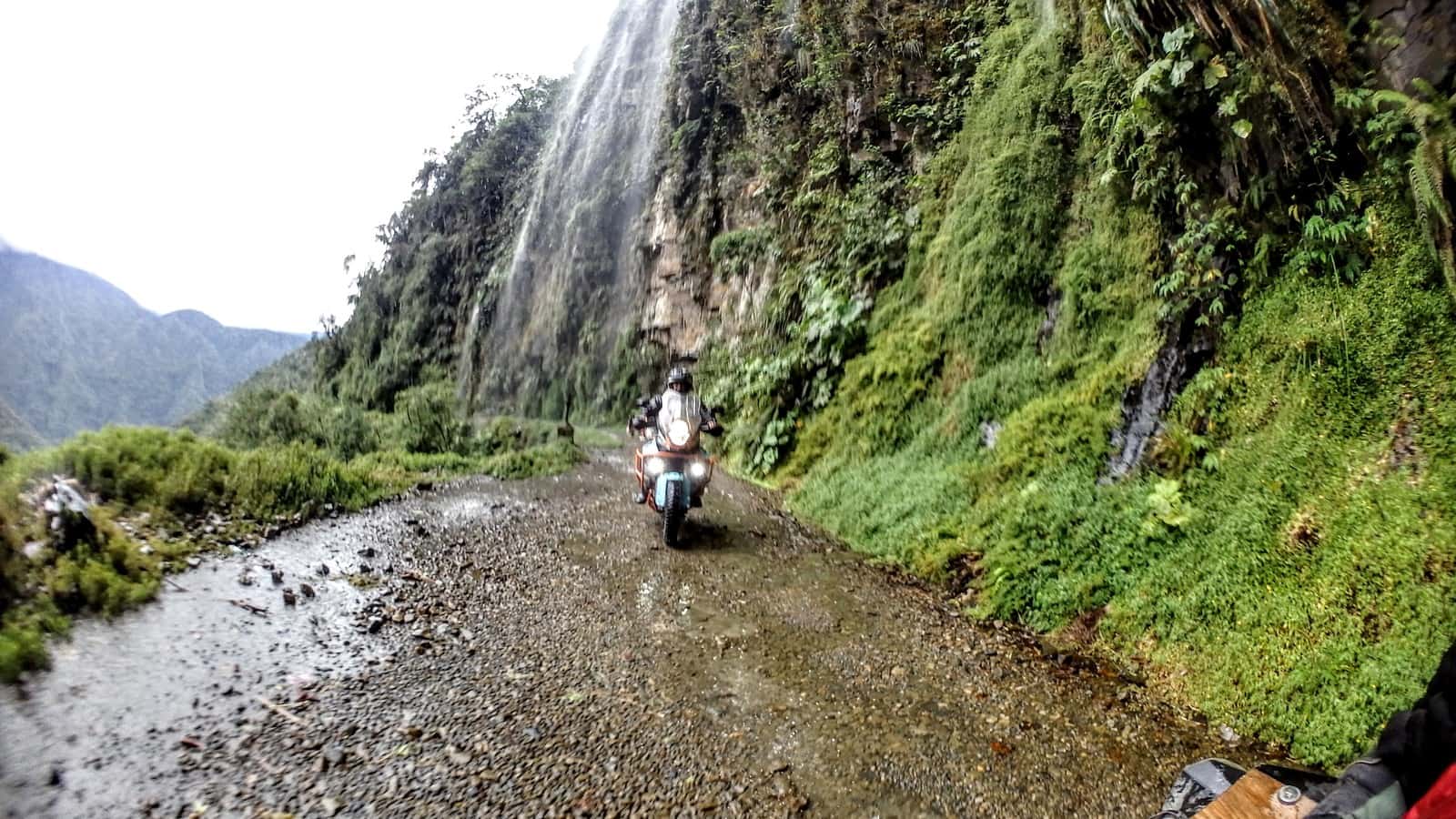
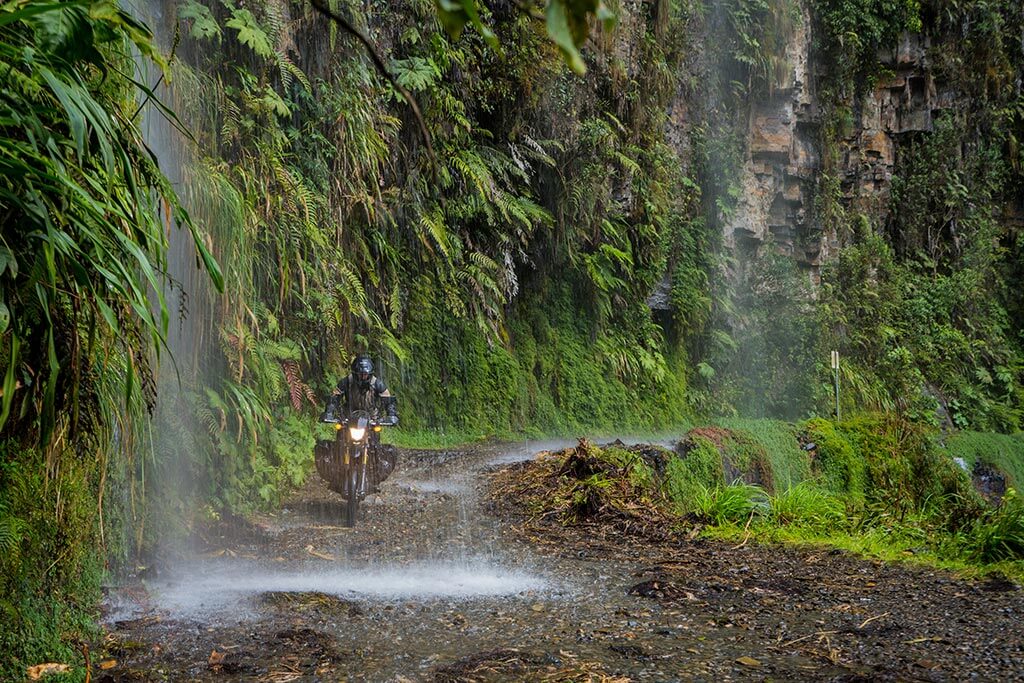
Fascinating geological sections where the road cuts under waterfalls
You leave La Paz early and climb to La Cumbre at 4,650 metres, reaching the pass soon after first light, where the air is thin and the ground is often frozen. Guides check brakes, tyre pressure and gloves against a wall of Andean rock. The first 20 kilometres are asphalt, a fast, cold run down to Unduavi.
You hold your line, you lose feeling in your fingers, you get it back about the time the trees begin.
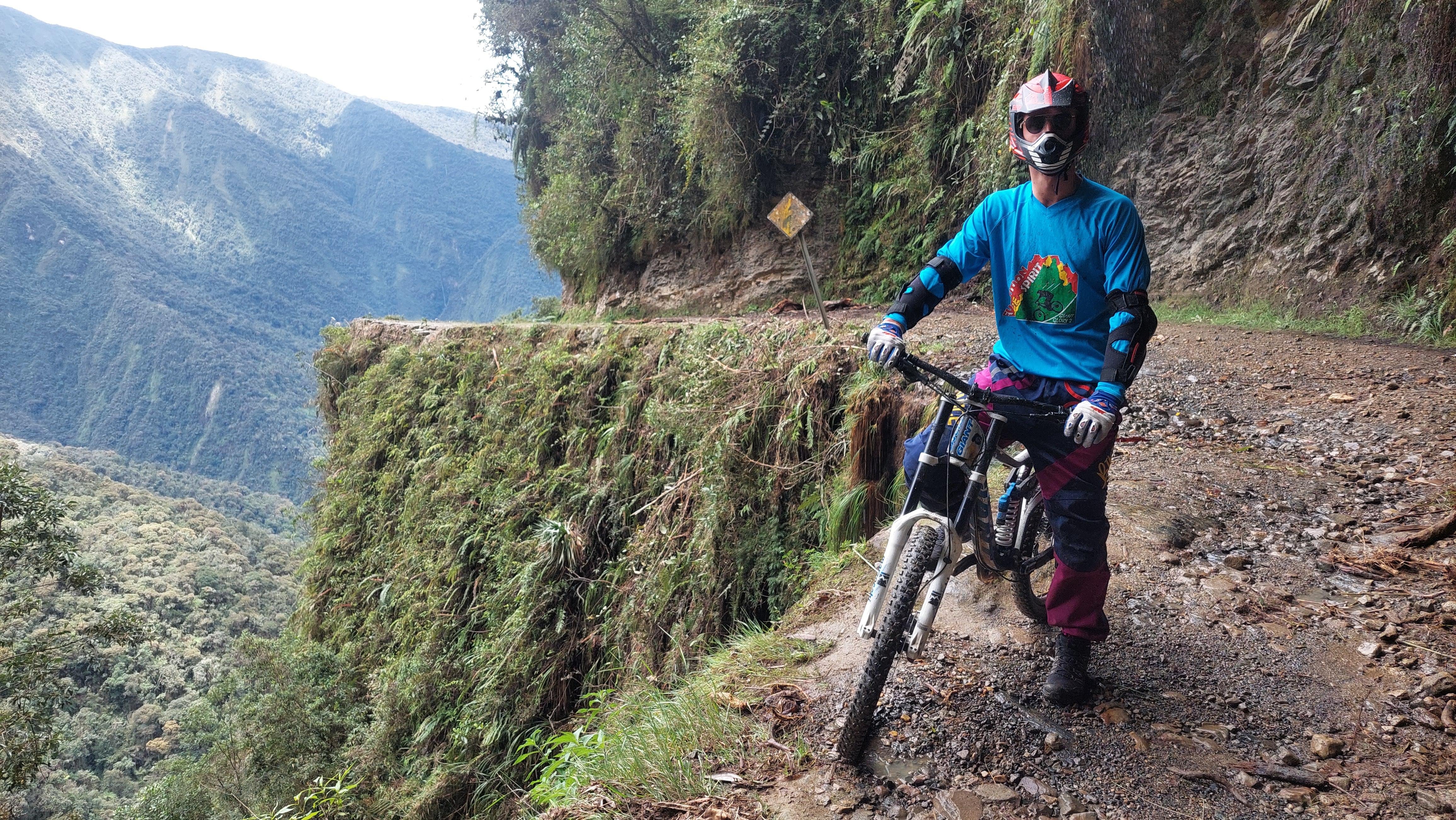
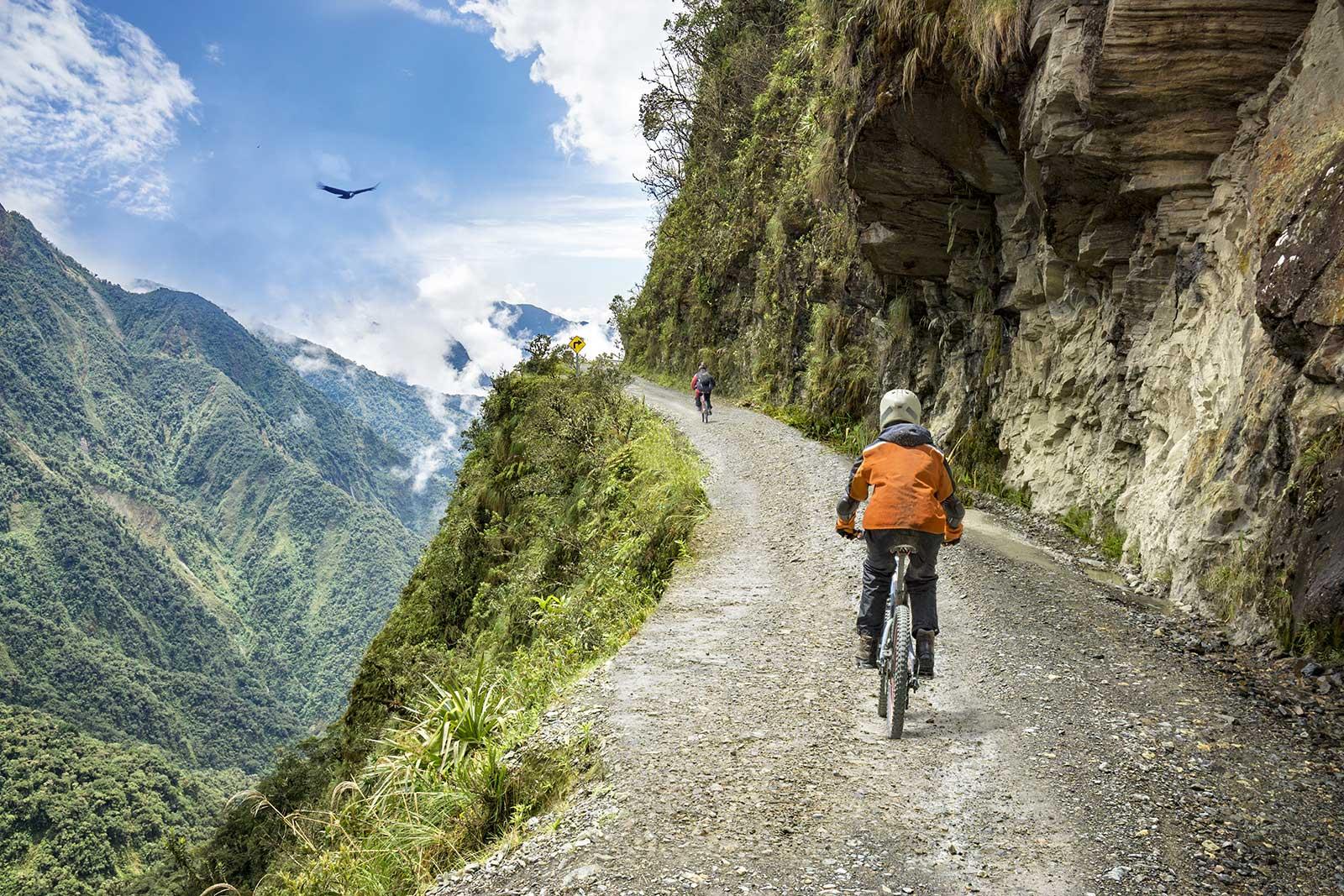
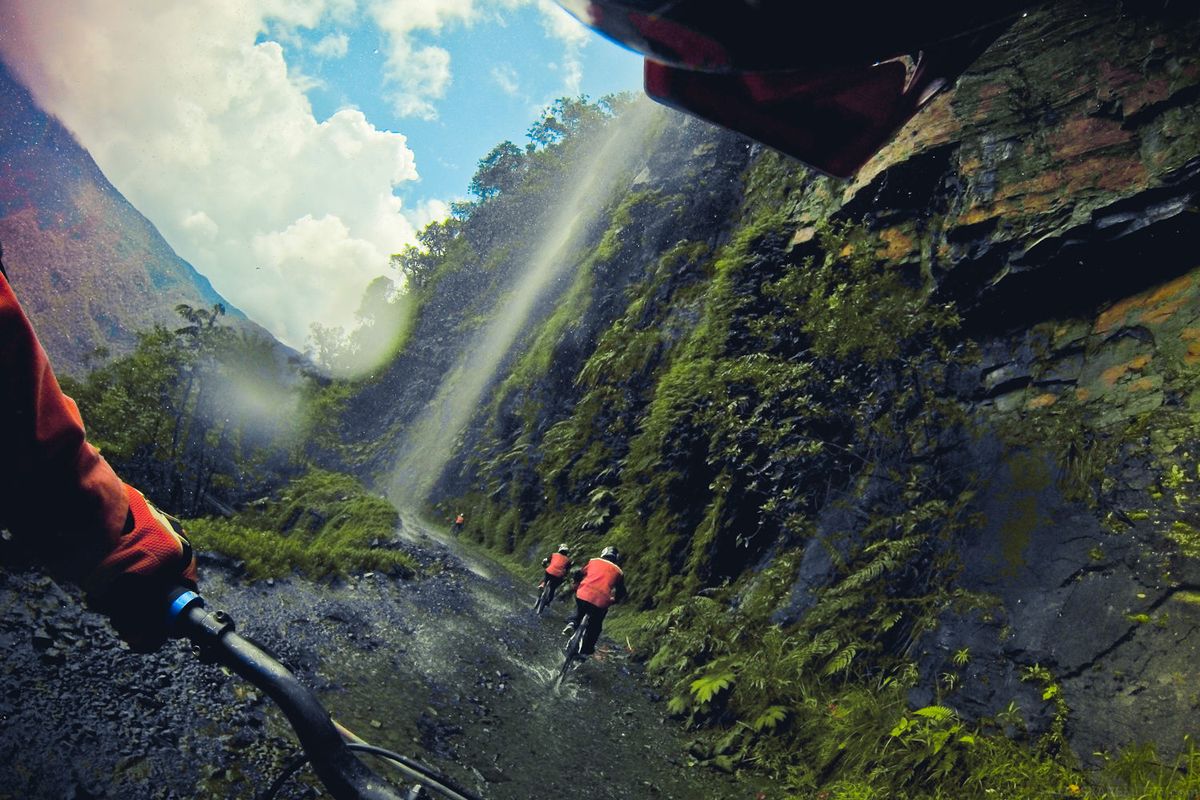
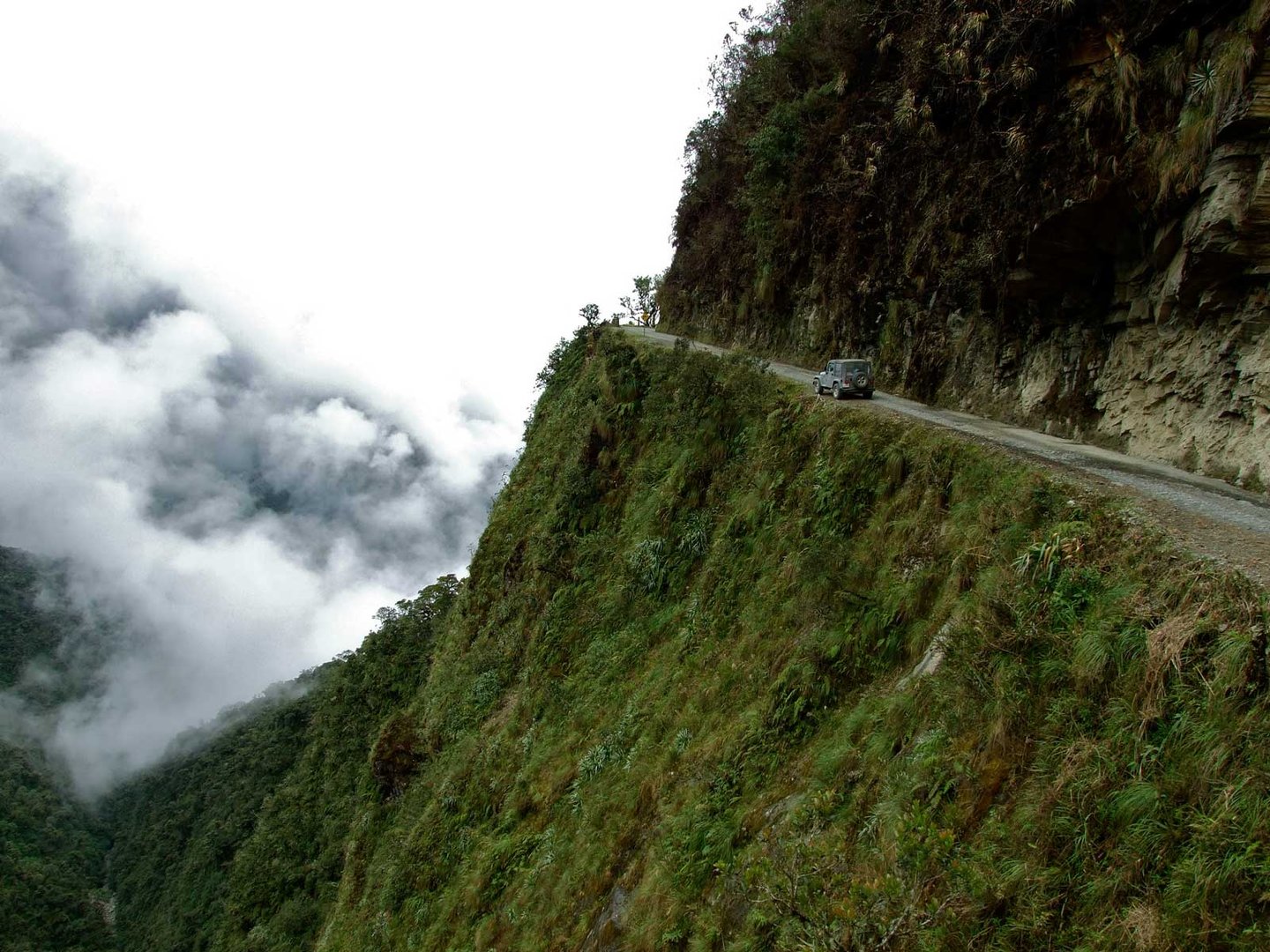
Then the pavement ends. At the Cotapata checkpoint you pay the 50 BOB conservation fee per person, and the gravel starts — 32 kilometres of it, ledge-narrow, the outer edge unmarked. You keep left, against every instinct, because that is the rule here. Waterfalls cross the track at three or four points and soak your boots. You pull over where the cliff opens and let the group re-form; below you, the valley floor is 800 metres of green.
By early afternoon you roll into Yolosa at around 1,200 metres, 3,400 metres lower than breakfast, with mud to your knees and a shirt you no longer need. Most Death Road Bolivia Motorcycle Tour tickets cover the shuttle back up through Coroico, a meal and a shower before the return leg to the city. You sleep on the bus. Nearly everyone does.
All the details about your upcoming adventure in one place
Bolivia's most notorious highway lost its traffic almost overnight: a paved bypass through Chuspipata opened in 2006, and the old carriageway emptied of freight within a season.
What remained is the 64-kilometre gravel shelf that draws every Death Road Bolivia Motorcycle Tour and bicycle descent booked out of La Paz today. Cut into the eastern flank of the Cordillera Real by Paraguayan prisoners during the 1930s Chaco War, the route was christened Camino de la Muerte long before tourism arrived. The Inter-American Development Bank named it the world's most dangerous road in 1995.
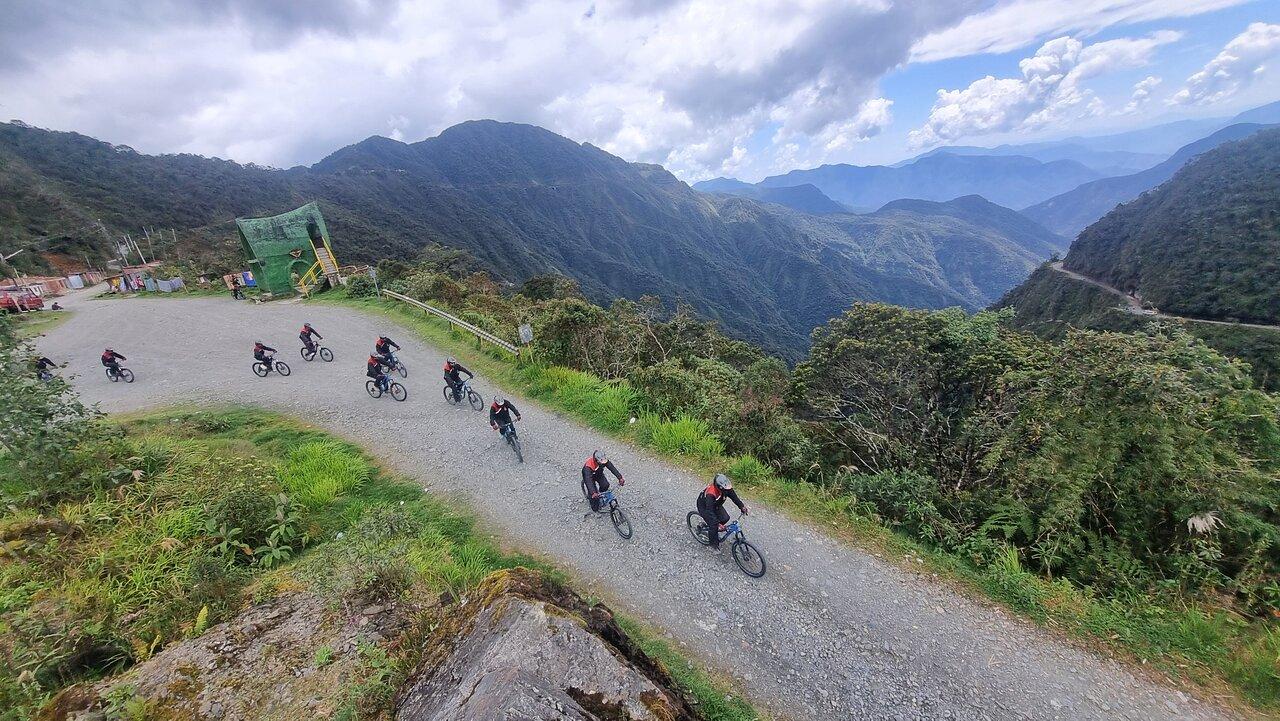
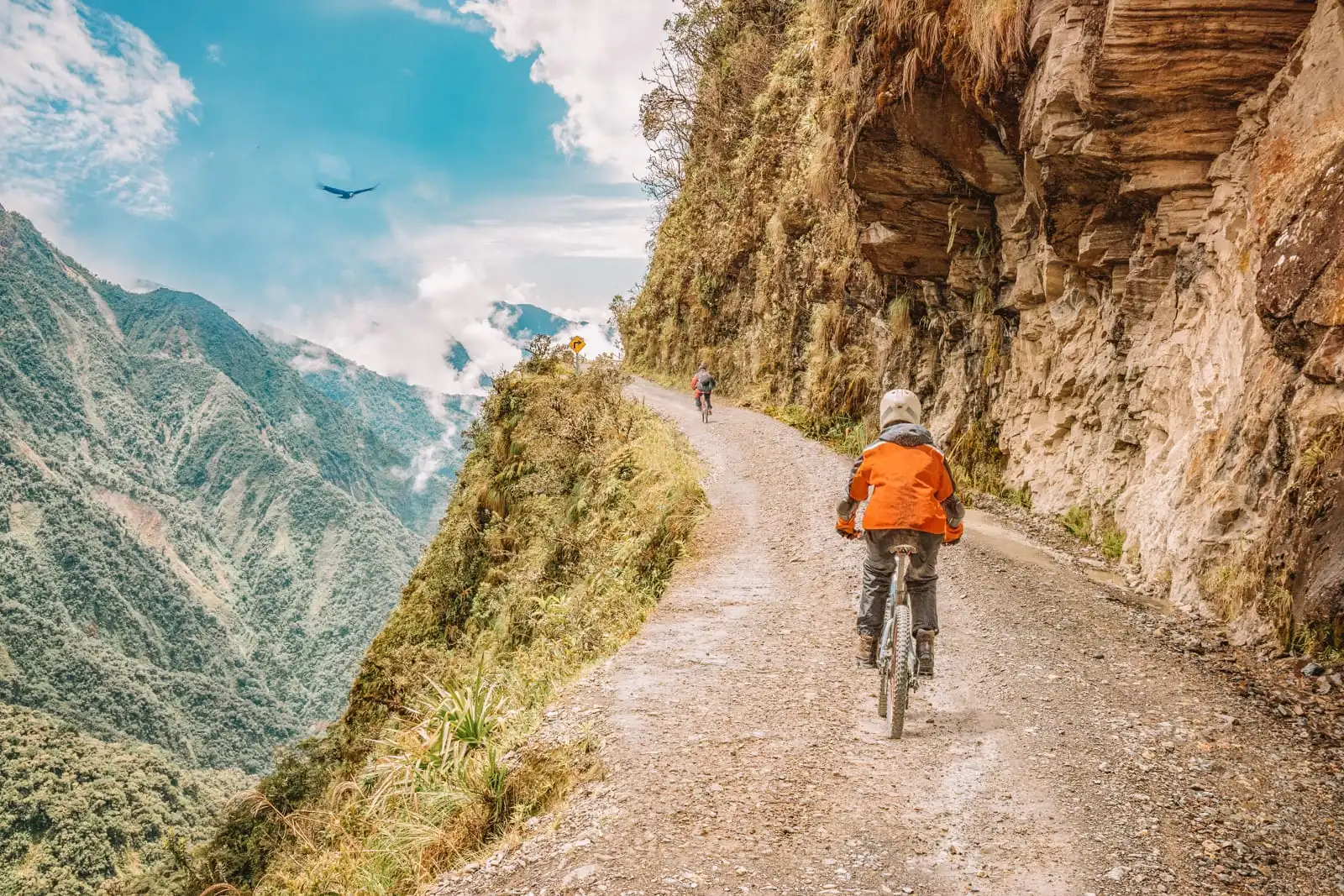
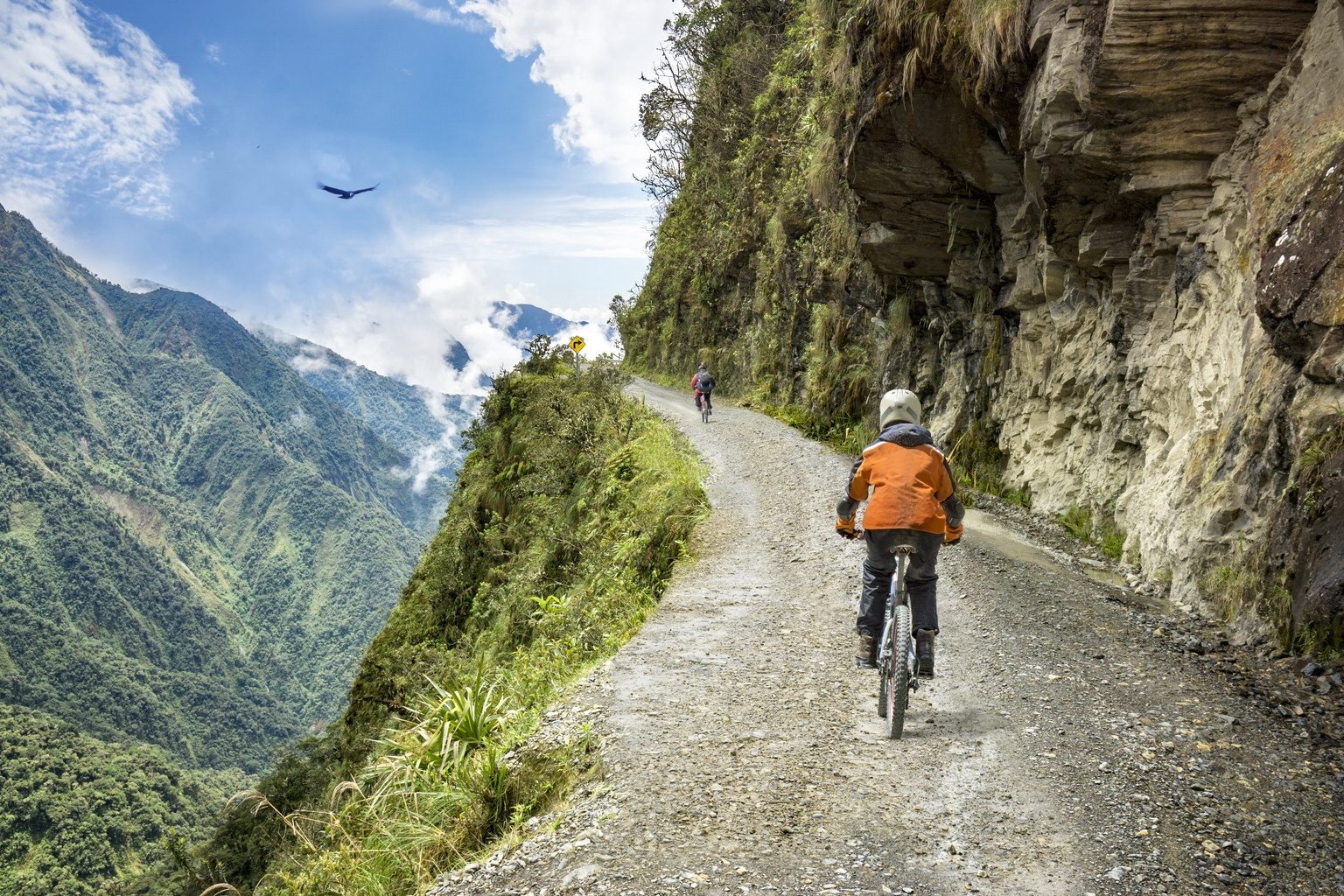
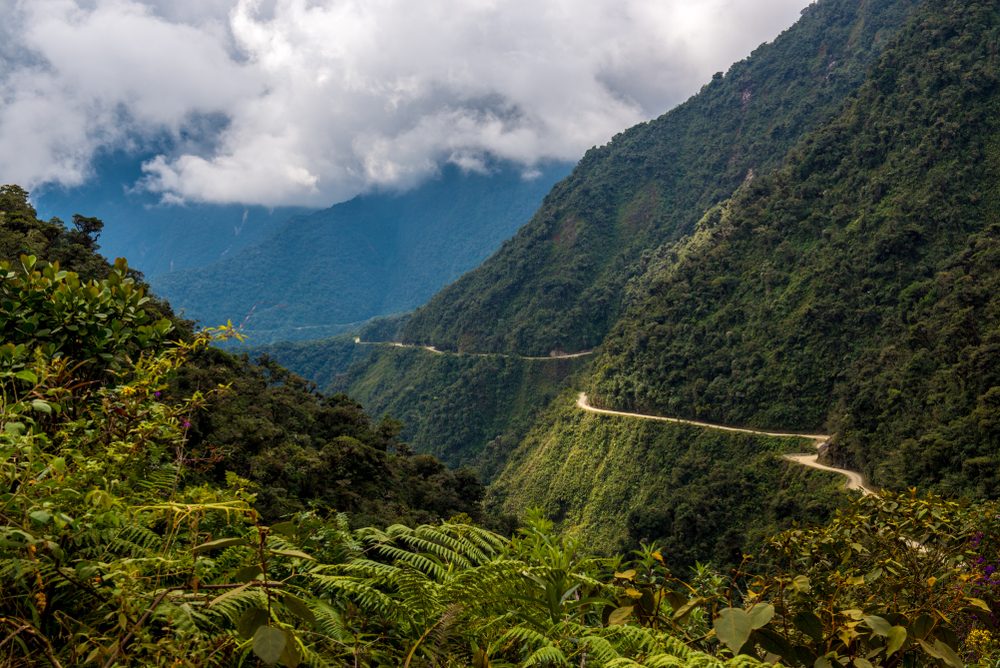
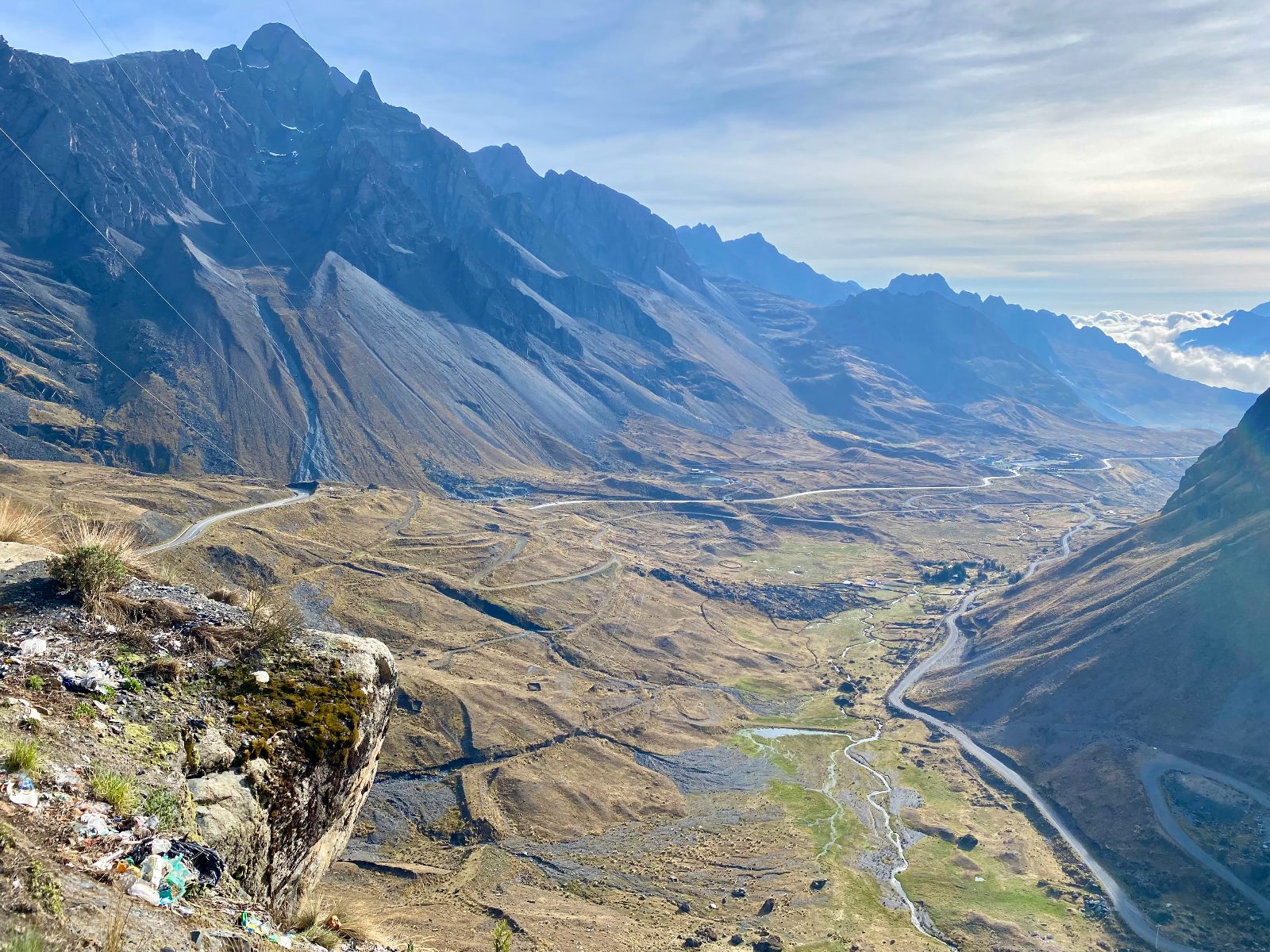
Its significance now is geographic rather than infamous. The road falls roughly 3,500 metres in a single run, from the La Cumbre pass at 4,650 metres to Yolosa at about 1,200, crossing four climate bands on the way. Riders leave the altiplano in sleet and finish among banana palms. The corridor threads Cotapata National Park, where cloud forest condenses on the cliff face and waterfalls cross the running surface without culverts. Bolivian traffic convention inverts here — descending vehicles keep left, on the outside — a rule written for drivers who needed to see their own wheels above the drop.
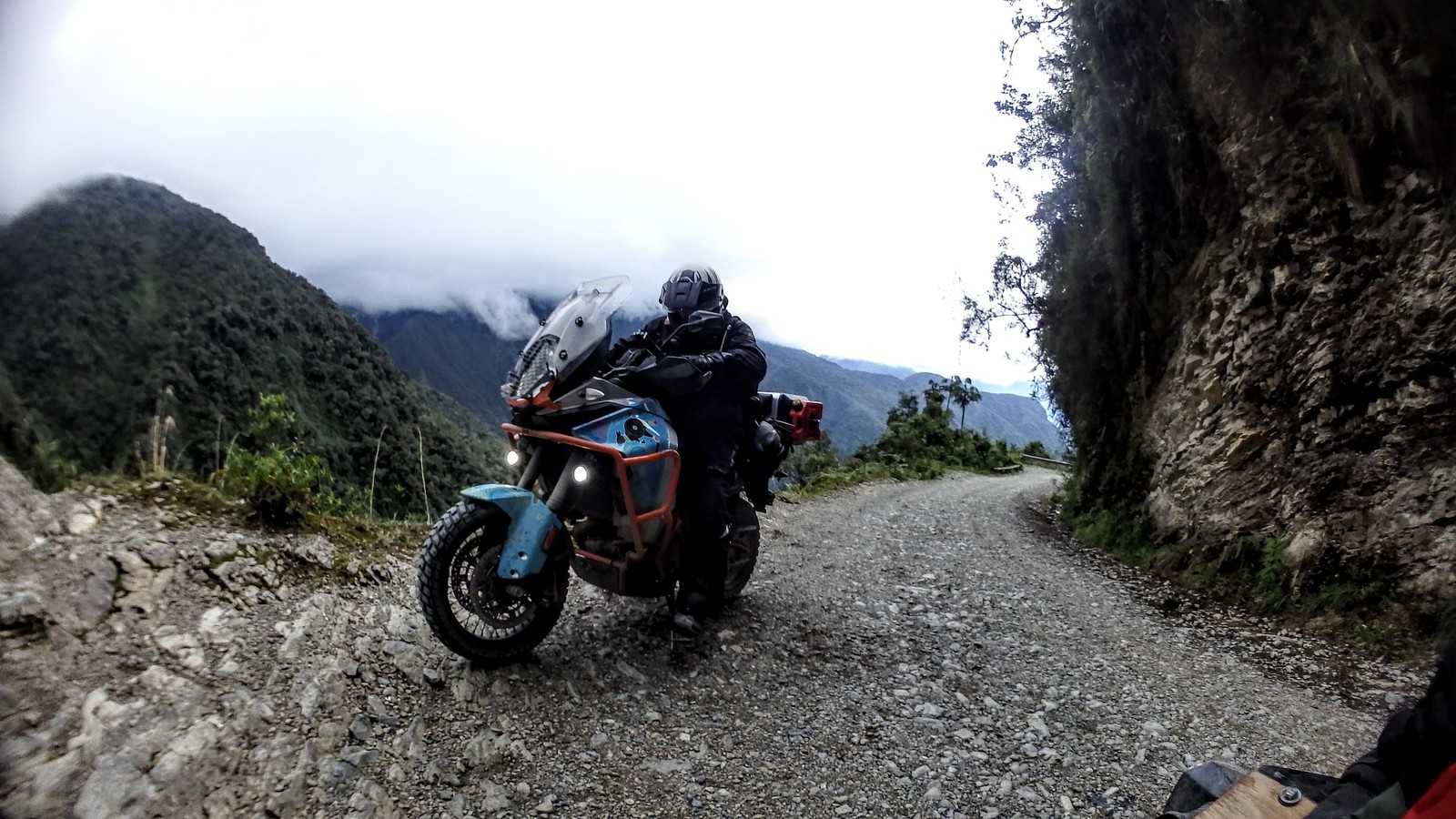
Engineering explains the fear. The carriageway narrows to about 3.2 metres in places, unguarded, with vertical falls exceeding 600 metres below the outer edge. There are no barriers, no shoulder and few passing bays; the surface is loose shale, packed clay and, in the wet months, running water. Modern Death Road Bolivia Motorcycle Tour tours and guided Yungas Road descent tours therefore run with a support vehicle trailing the group, a convention adopted after the operator fatalities of the 1990s. The road remains a public right of way, and local traffic out of Coroico still uses its upper sections.
That mix of public road and managed adventure defines the place in 2026. Access is ungated and the corridor has no closing time, though a conservation fee of 50 BOB per person goes toward upkeep of the Cotapata section; the address drivers are given is simply Yungas Road, La Paz Department, Bolivia. Passable at any hour, it is nonetheless a morning road — almost every Death Road Bolivia Motorcycle Tour tour and cycling group reaches the pass between 07:00 and 10:00, while the cloud layer still sits below the summit of Huayna Potosí to the north.
The road falls three and a half kilometres in sixty-four, and changes climate four times doing it.
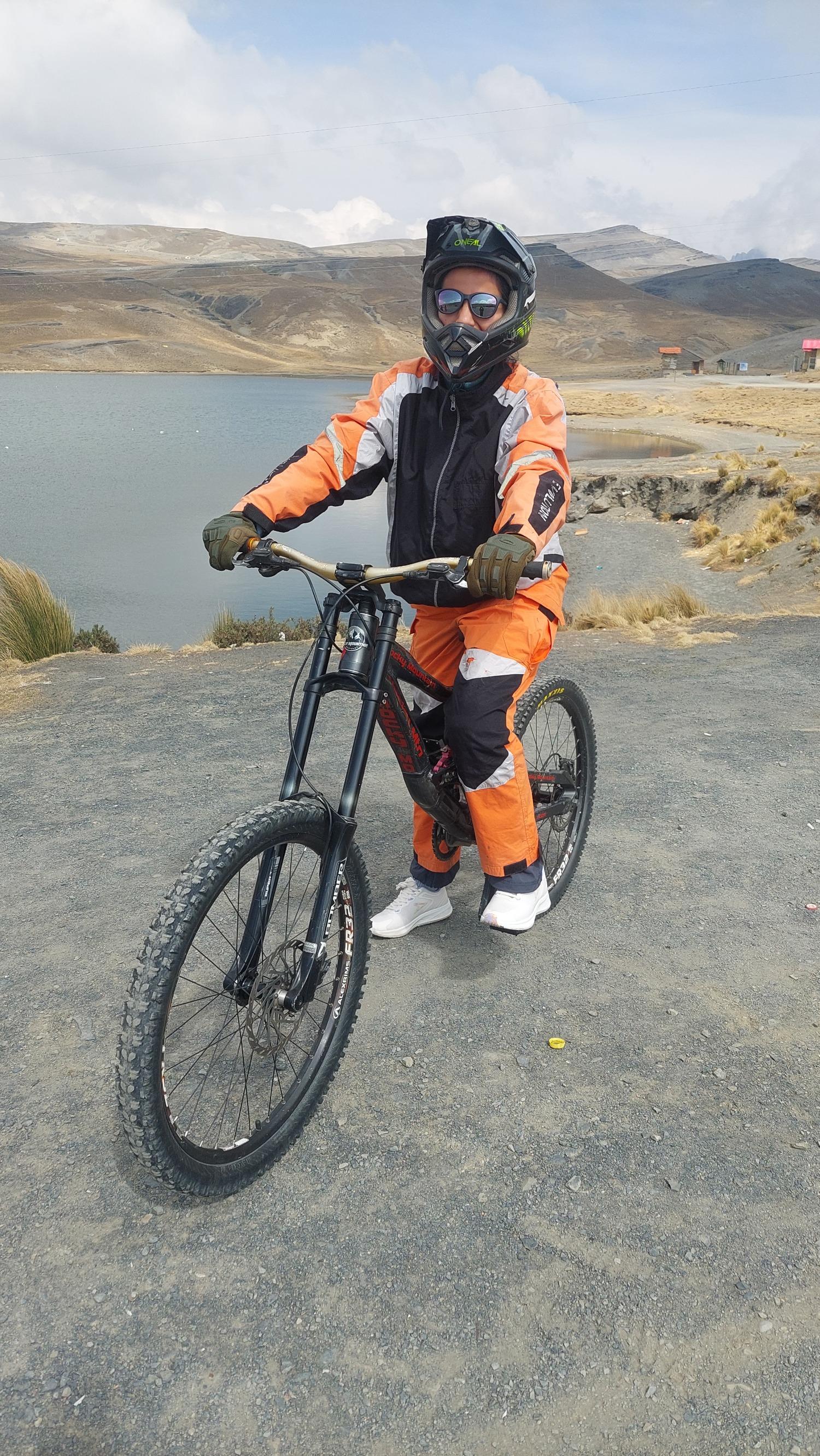
Wear abrasion-resistant motorcycle gear including protective jackets, trousers, and sturdy gloves. A DOT-approved helmet is required for every death road bolivia motorcycle tour participant.
Secure small backpacks or tank bags to the motorcycle frame. Do not carry loose items that may distract from operating a death road bolivia motorcycle tour vehicle.
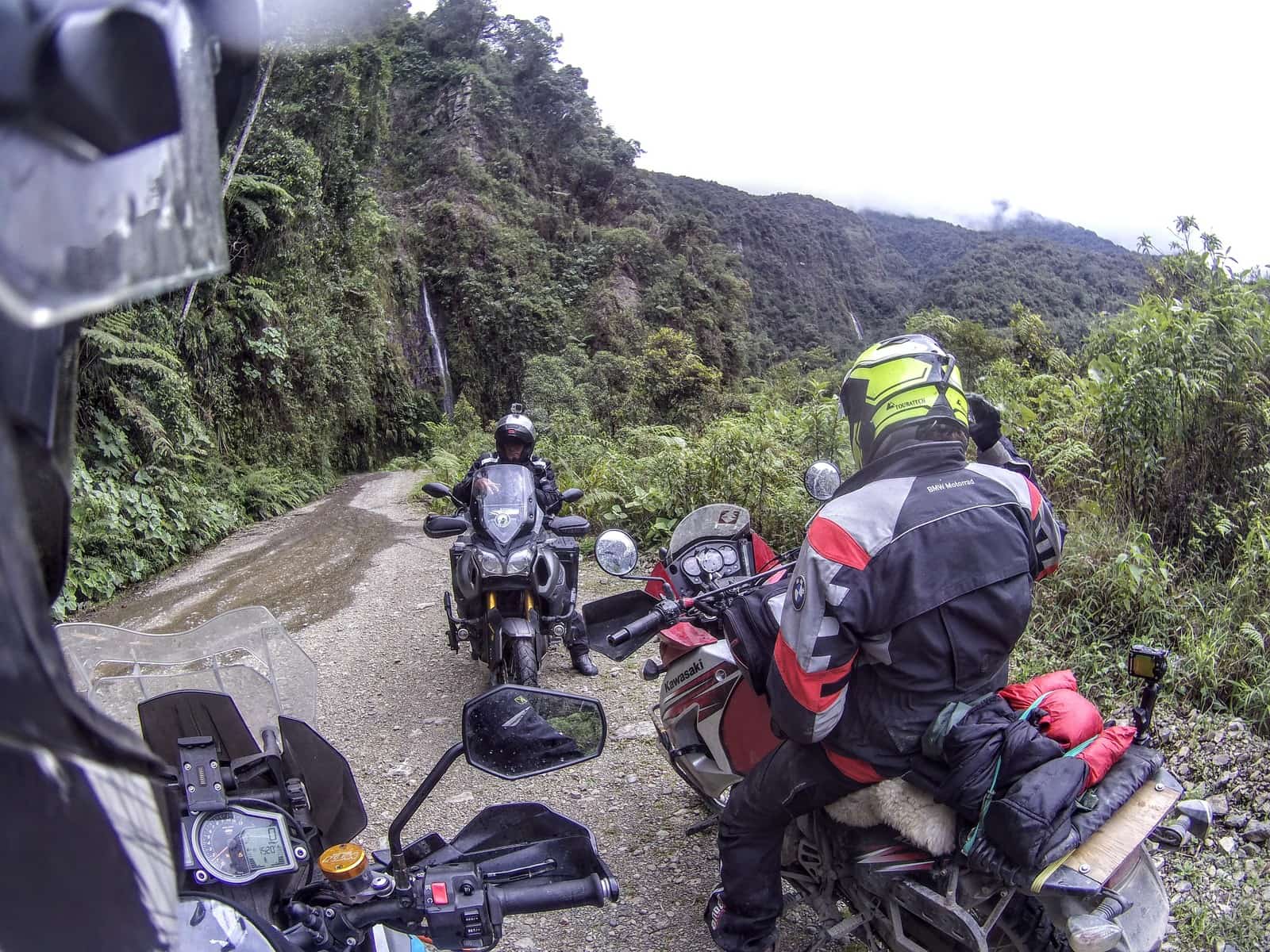
Use helmet-mounted or handlebar-mounted cameras to ensure hands remain on controls. Stop only at designated wider points along the death road bolivia motorcycle tour route for handheld photography.
Motorized tours are restricted to licensed adults. Children are not permitted to operate or ride as passengers on a death road bolivia motorcycle tour due to safety risks.
This route is not accessible to standard tourists without a guided death road bolivia motorcycle tour. The terrain consists of narrow, unpaved cliffside paths.
Bring sufficient hydration and high-energy snacks as no services exist along the descent. Most operators provide a post-ride meal near Coroico.
Opening Hours
00:00–23:59
Address
Yungas Road, La Paz Department, Bolivia
Accessibility
High-clearance vehicles required
Best Arrival
07:00–10:00
Conservation Fee
50 BOB per person
Car · 2.5h · Toll fees apply
Follow Route 3 from La Paz toward the Yungas region
Taxi · 2h · Variable pricing
Private transfer recommended for equipment transport
Cancellations made 48 hours prior receive a full refund of tour costs, excluding the mandatory 50 BOB conservation fee. No-shows forfeit the full amount.
Recommended time
Full day
A death road bolivia motorcycle tour typically requires a full day to complete the journey from the high Andean peaks down into the humid Yungas cloud forest. Following the best arrival window of 07:00–10:00 is vital for safety, as it ensures optimal daylight visibility during the descent and avoids heavy traffic on this narrow mountain passage. Completing the Yungas Road trek by motorcycle involves multiple stops for photography and rest, and securing necessary death road bolivia motorcycle tour tickets early helps manage your schedule. Those interested in booking death road bolivia motorcycle tour tours should anticipate spending 8 to 10 hours from pickup to return to ensure a measured pace on the switchbacks.
Crowd levels through the day
Weather · crowds · average price — dots go green to amber to red as each metric rises.
The dry season offers the clearest visibility and driest road surfaces for a death road bolivia motorcycle tour.
Rainy season increases mud and rockfall risks, often leading to reduced road safety.
Inspect brakes and tire pressure before leaving La Paz. Reliable equipment is vital for a safe death road bolivia motorcycle tour experience.
Stay behind the lead rider to manage road width constraints. Passing is dangerous on narrow sections of the death road bolivia motorcycle tour path.
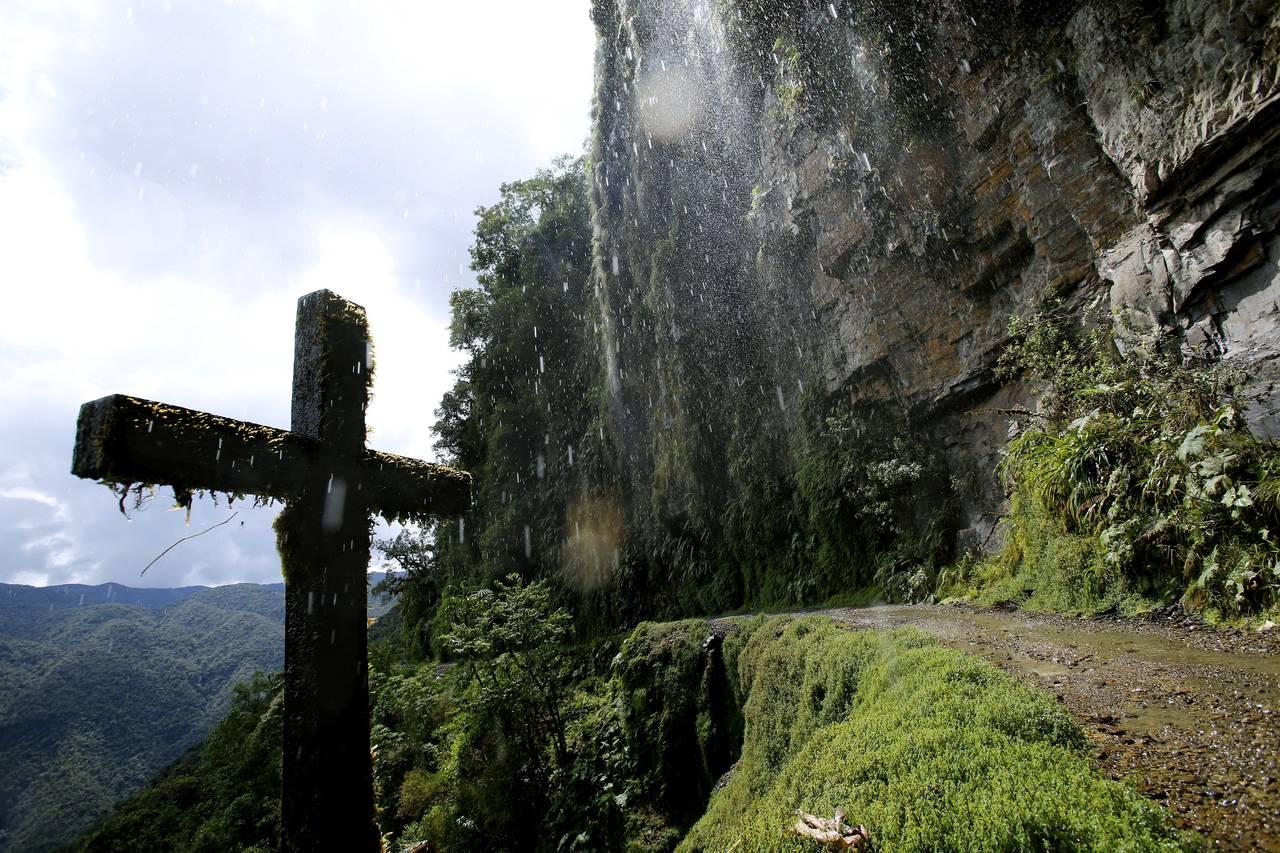
The North Yungas Road was cut into the Cordillera Oriental during the 1930s, in the aftermath of the Chaco War of 1932-1935. Paraguayan prisoners of war supplied much of the labour, working with hand tools on a near-vertical escarpment. The result was a single lane, barely three metres wide, unpaved and without guardrails. Its purpose was commercial: to bind the highland capital to the subtropical valleys that produced coca, coffee and citrus. Every death road bolivia motorcycle tour still follows that original alignment, falling from the La Cumbre pass at roughly 4,650 metres toward the cloud forest above Coroico. For fifty years the road served as a freight artery rather than a spectacle. Trucks, buses and coca convoys met head-on inside cloud. A local convention reversed the rule of the road: descending vehicles kept left, so drivers could judge their outer wheel against the void. The system failed often. In July 1983 a bus left the carriageway near Coroico and fell into the canyon, killing more than a hundred people, the deadliest road accident in Bolivian history. Operators of death road bolivia motorcycle tour tours still cite that date. In 1995 the Inter-American Development Bank named the route the world's most dangerous road, estimating two to three hundred deaths a year. The label travelled further than any tourism campaign. Commercial descents began in 1998. The decisive change came in 2006, when a paved bypass through Chuspipata opened after some two decades of construction, and freight abandoned the old shelf almost overnight. Within a few years, death road bolivia motorcycle tour tickets had replaced haulage as the corridor's principal economy. Little has been erased. The 1930s retaining walls, the waterfall crossings and the roadside crosses remain in place. A death road bolivia motorcycle tour tour therefore descends some 3,500 vertical metres of genuine artefact, on gravel little altered since the prisoners laid it. Guided Yungas Road motorcycle tours now share the surface with cyclists and Yolosa coffee traffic, and the Camino de la Muerte endures as one of Bolivia's most legible landmarks.
The Chaco War between Bolivia and Paraguay leaves thousands of Paraguayan soldiers in Bolivian captivity.
Prisoners of war carve the single-lane North Yungas Road into the escarpment linking La Paz with Coroico.
The route becomes the principal freight artery for coca, coffee and citrus moving from the Yungas to the highlands.
A bus falls into the canyon near Coroico, killing more than a hundred passengers in Bolivia's deadliest road accident.
The Inter-American Development Bank labels the corridor the world's most dangerous road, citing 200 to 300 deaths a year.
The first commercial descents run the route, shifting its reputation from haulage to adventure travel.
A paved bypass through Chuspipata opens after roughly twenty years of construction, diverting nearly all through traffic.
The old gravel road carries almost no freight and functions as a heritage descent for cyclists and motorised groups.
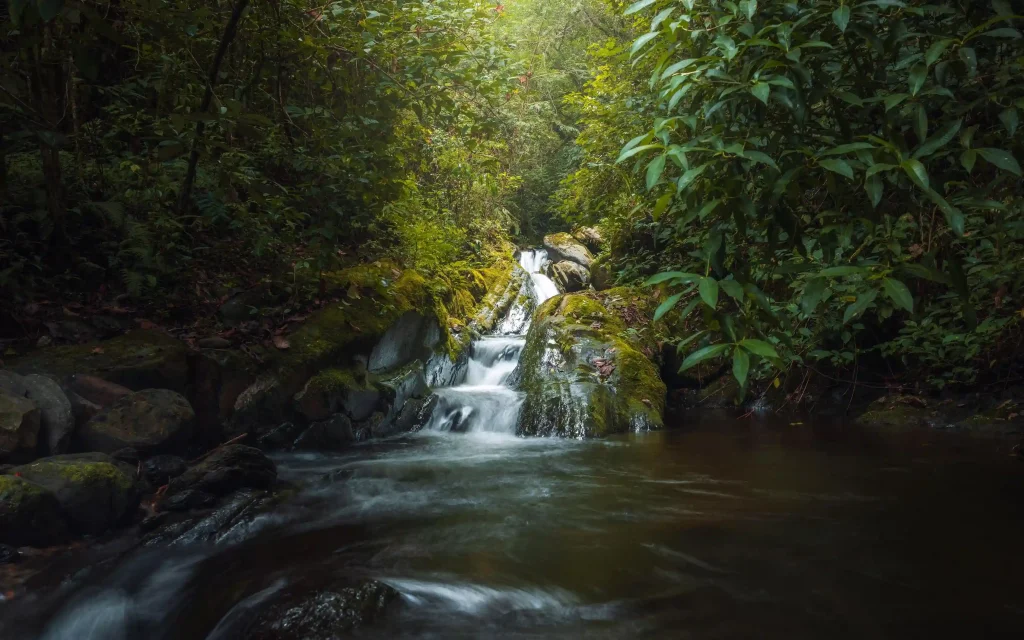
Position your camera at the base of this cascading water feature to capture the sheer cliff face backdrop. This is a common stop on a death road bolivia motorcycle tour to document the contrast between the road and the mossy rock walls.
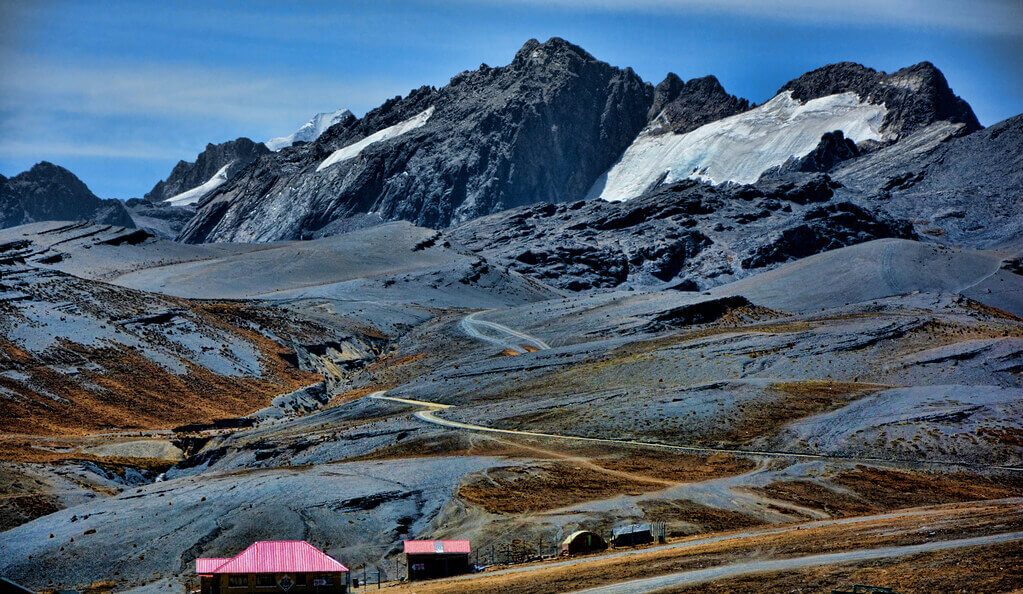
Standing at the start of the descent, this vantage point offers a wide-angle perspective of the Andean peaks before entering the cloud forest. It provides an essential shot of the winding path ahead for those booking death road bolivia motorcycle tour tours.
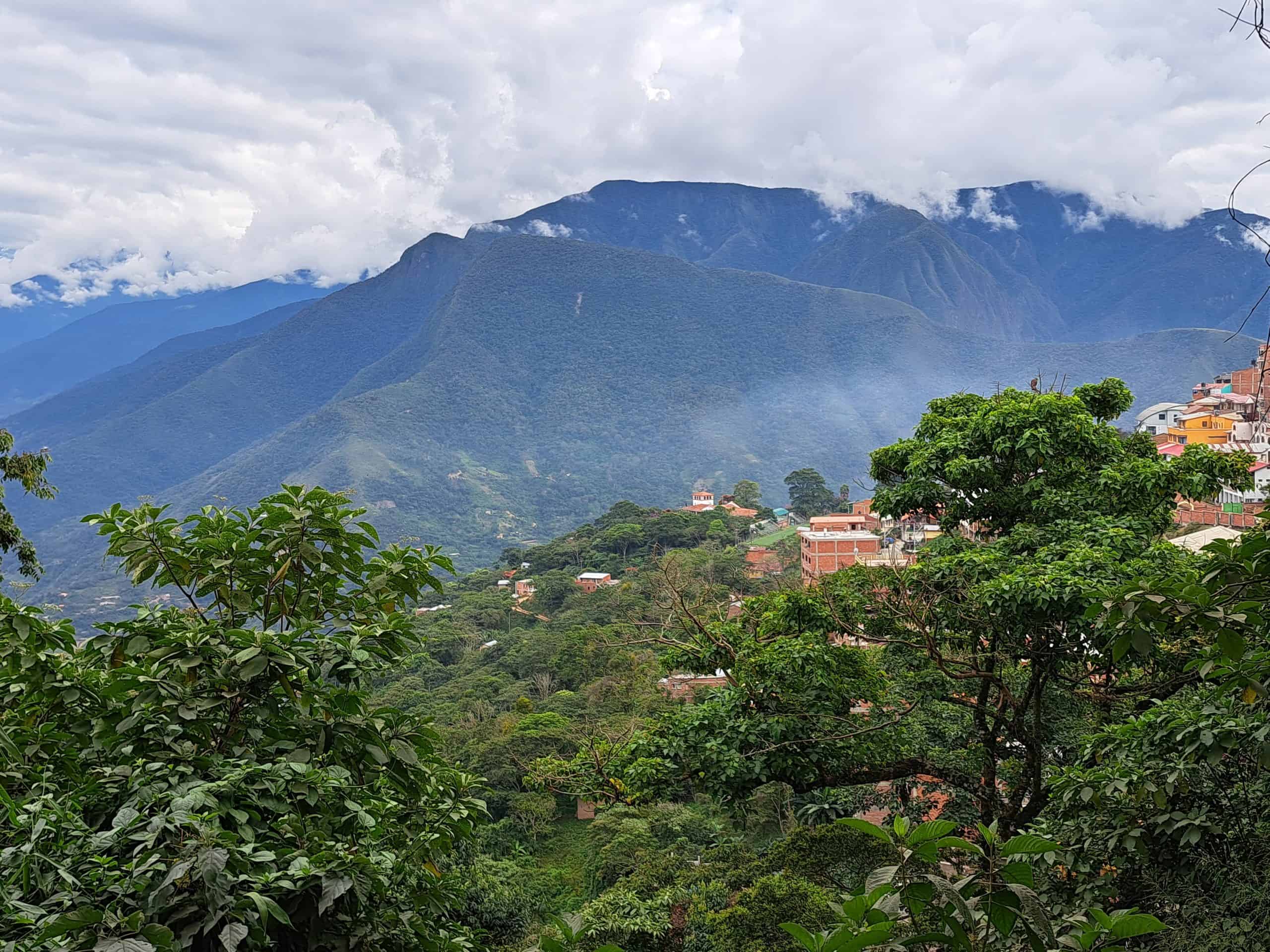
Use this pull-off to photograph the deep, verdant canyon floor stretching toward the Amazon basin. It is the best location for panoramic images of the precipice often featured in death road bolivia motorcycle tour tour portfolios.
Capture the narrow, unpaved road ledge as it clings to the vertical terrain from a safe distance. Photographers utilize this spot to show the scale of the route before securing their death road bolivia motorcycle tour tickets for the continuation of the ride.
Planning a death road bolivia motorcycle tour requires careful consideration as this challenging mountain route is unsuitable for young children or inexperienced passengers. The narrow cliffside terrain of the Yungas Road makes it an environment intended strictly for adults and mature teenagers capable of managing significant high-altitude logistics.
The path is entirely unpaved, steep, and narrow, making strollers impossible to use on this route. You must rely on specialized transport arranged through your tour operator for any movement along the cliff edge.
This experience is strictly for adults; operators enforce age limits based on physical capability and legal liability requirements. Please confirm the specific minimum age with your provider when booking death road bolivia motorcycle tour tickets.
There are no public toilets, changing rooms, or rest facilities along the descent. Plan to use restrooms before departing from La Paz and carry all necessary supplies with you for the duration of the trip.
To manage the technical nature of the path, keep your arrival window between 07:00–10:00 to minimize exposure to other vehicles. This early start allows for safer navigation on the death road bolivia motorcycle tour tours compared to afternoon hours.
Ensure everyone is acclimated to the high altitude before attempting this activity, as the descent covers a significant elevation change. Consult with your guide regarding the specific safety gear required for a death road bolivia motorcycle tour tour.
Most organized trips include snacks and a post-ride lunch at hotels near the end of the descent, but independent travelers will find local kitchens and cafés in nearby Coroico to refuel after their death road bolivia motorcycle tour. Whether you need a quick caffeine fix or a hearty meal, this mountain village offers diverse flavors after your death road bolivia motorcycle tour tour.
A farm-to-table destination known for its coffee tours and quinoa dishes; requires advance booking for a meal after your death road bolivia motorcycle tour tickets purchase.
A German-inspired garden spot in Coroico offering comfort food and a welcoming atmosphere perfect for resting sore muscles.
A cozy choice in Coroico serving fresh baked goods and local snacks that pair well with the cooler jungle air.
Located in Coroico, this spot specializes in authentic Bolivian flavors and provides a quiet space to process the day's adventure.
Found around the main plaza in Coroico, these local stalls serve fresh juices and quick snacks perfect for those on a tight schedule.
Everything you need to know for your journey
The road is open 00:00–23:59 daily, though tours typically utilize daylight hours.
Yes, a valid motorcycle license is mandatory for any death road bolivia motorcycle tour operator.
No, the 50 BOB conservation fee is typically separate from your booking price.
Start between 07:00–10:00 to avoid traffic and ensure you have daylight for the entire descent.
Yes, but helmet mounts are required to keep your hands on the bars during the death road bolivia motorcycle tour.
The route is challenging; follow your guide’s instructions to navigate the narrow path safely.
Book through authorized operators listed in the tour grid provided on this page.
Operators require participants to be legal adults for a death road bolivia motorcycle tour.
Cancellations 48 hours in advance are fully refundable excluding the conservation fee.
Most tours provide snacks or a meal at the end, but you must bring water for the descent.
High-altitude mountain pass marking the start of the descent
Relaxed hillside town featuring regional coffee plantations
Protected area surrounding the upper sections of the road
Central hub with extensive tour operator support
Tropical valley lodging for post-tour recovery
Join thousands of happy travelers who have discovered this incredible experience
Book Your Experience Now